Fast Read
For Brisbane homes with complex, multi-angled, or partially shaded roofs, microinverters for solar panels are almost always the superior choice. Unlike traditional string inverters that can have their output crippled by a single underperforming panel, microinverters optimise each panel individually, maximising energy harvest. A premium 6.6kW solar system with Enphase microinverters in Brisbane typically costs between $8,000 and $11,000, compared to a $5,000 – $7,000 string inverter system. However, the increased energy yield, superior monitoring, and longer warranties often result in a faster payback period and greater long-term value, especially in challenging Queensland conditions.
If your roof isn’t a simple, north-facing rectangle, you’ve got what installers call a “complex roof.” This could mean multiple roof sections (facets) facing different directions, the presence of dormer windows, satellite dishes, or unavoidable partial shading from trees or a neighbouring property.
This is where the benefits of microinverters shine. A traditional “string” inverter system links all your solar panels together in a series, like old-school Christmas lights. If one panel’s performance drops—due to a shadow, debris, or a fault—the output of every other panel in that string drops to match it.
Microinverters change the game entirely. One small microinverter is attached to the back of each solar panel. This setup converts the DC power generated by the panel into AC power right at the source. Each panel becomes its own independent power generator.
The result?
-
Shade Tolerance: A shadow falling across one panel doesn’t affect the others at all.
-
Multiple Orientations: You can have panels facing north, east, and west, and each one will produce at its maximum potential throughout the day.
-
Mismatch Proof: You can even use different panel models or brands in the same system if a replacement is needed down the line, something that’s highly problematic for string systems.
Microinverters vs string inverters: Which is better for shade?
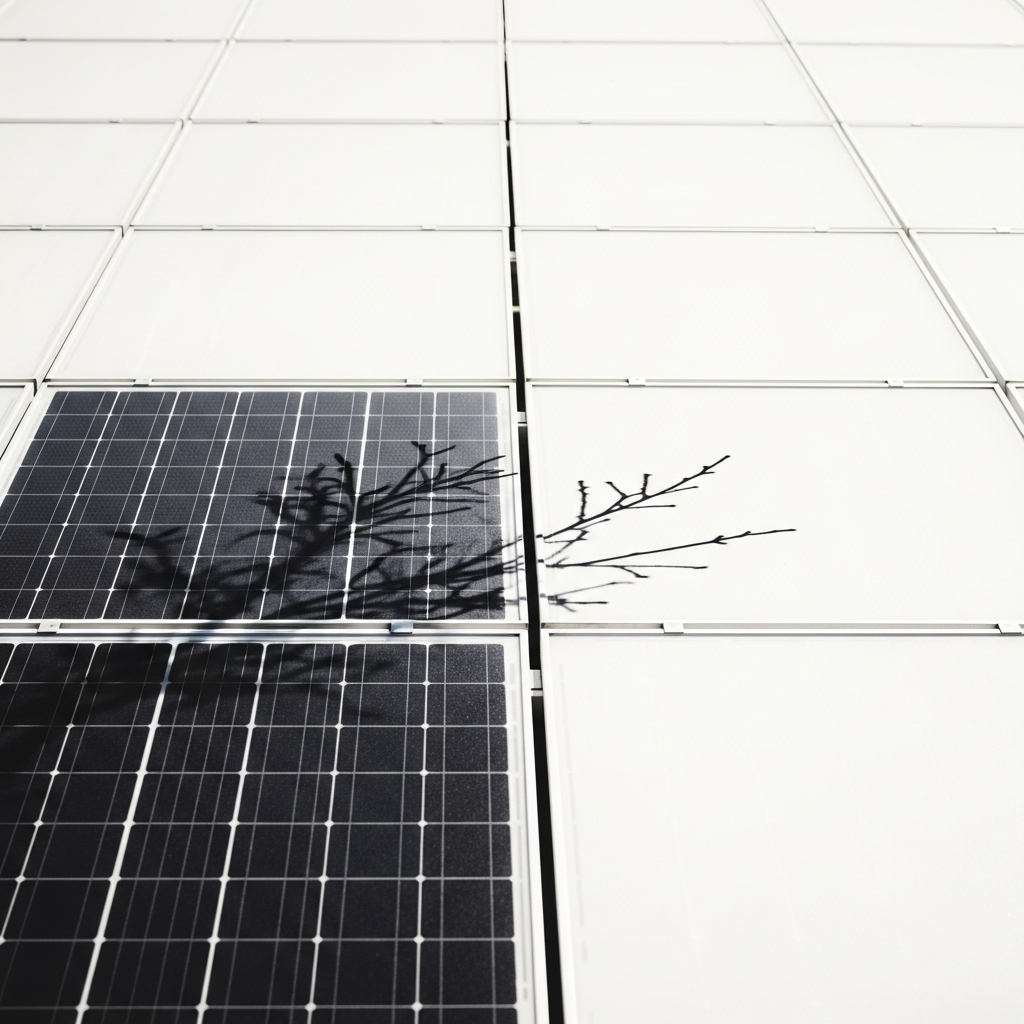
For any roof that experiences partial shade, the microinverters vs string inverters debate has a clear winner. A microinverter system will significantly outperform a standard string inverter system every time.
Imagine a string of 10 panels. A large shadow from a tree branch falls across just one of them, cutting its output by 50%. With a standard string inverter, the output of the entire 10-panel string can be dragged down by 50%. The system is only as strong as its weakest link.
Now, consider the same scenario with microinverters for solar panels. The shaded panel’s output drops by 50%, but the other nine unshaded panels continue to operate at 100% of their potential. The overall system energy loss is minimal. This resilience is crucial in leafy Brisbane suburbs where morning or afternoon shade is common.
| Feature | String Inverter System | Microinverter System |
|---|---|---|
| Shade Impact | High: One shaded panel reduces the entire string’s output. | Low: Only the shaded panel’s output is reduced. |
| Performance | Limited by the lowest-performing panel. | Each panel produces at its maximum potential. |
| Roof Design | Best for simple, unshaded, single-direction roofs. | Ideal for complex roofs with multiple angles and shading. |
| Monitoring | System-level monitoring only (by default). | Panel-level monitoring is standard. |
How do microinverters work on roofs with multiple orientations?
Many Brisbane homes have roofs with facets facing different directions—for example, north and west. This is a perfect use case for microinverters.
With a standard string inverter, you’d typically need a model with two separate inputs (called MPPTs) to handle two different orientations. Even then, the design can be restrictive.
With microinverters, the design is completely flexible. Your Solar Accreditation Australia (SAA) accredited installer can place panels on any suitable roof area, regardless of its direction. The west-facing panels will capture the valuable afternoon sun, while the north-facing panels handle the midday peak. Each panel contributes its maximum available energy independently, giving you a broader production curve and more self-generated power throughout the day.
Are microinverters worth the extra cost in Queensland?
I won’t sugarcoat it: a solar system with microinverters has a higher upfront cost. You’re essentially buying one small, robust inverter for every panel instead of one large central one.
In Brisbane, a good quality 6.6kW string inverter system might cost $5,000 – $7,000. The same size system using premium Enphase microinverters will likely be in the $8,000 – $11,000 range.
So, is it worth it? For a simple, shade-free roof, a quality string inverter is often perfectly adequate. But if you have any of the challenges we’ve discussed—shade, multiple roof angles, or a desire for the best possible performance and monitoring—the answer is a resounding yes. The extra energy harvested over the system’s 25-year life can easily cover the initial price difference, leading to greater savings.
Case Study: Solving Shade in The Gap The Chen family’s complex, multi-angled roof in The Gap was partially shaded by a large gum tree, making a standard string inverter system inefficient. Their quarterly bills were hitting $700. They opted for an 8kW system using 20 x 400W Trina panels, each with an Enphase IQ8 microinverter, for a total cost of around $12,500. The panel-level optimisation meant the shaded panels didn’t affect the rest of the array. Their annual savings are now over $2,400, giving them a clear payback period of just over 5 years. They now mainly pay the daily grid connection fee.
What are the best solar inverters for complex roofs in Brisbane?
When it comes to microinverters, one name dominates the market for good reason: Enphase Energy. They have been pioneers in this technology for over a decade and have a proven track record in the harsh Australian climate. Their products are known for reliability and are the go-to choice for installers tackling complex residential roofs.
Enphase microinverters Brisbane reviews are consistently positive, with homeowners praising the detailed monitoring app and the system’s performance in real-world conditions. While other brands exist, Enphase’s long-standing presence and excellent local support in Australia make them the benchmark.
What are the long-term benefits of panel-level monitoring?

This is one of the most underrated benefits of microinverter technology. Because each panel is monitored individually, you can see exactly what your system is doing in real-time through a simple app on your phone.
This panel-level monitoring is invaluable for: Gigi’s Pro Tip:With a microinverter system, make a habit of checking your monitoring app once a month on a clear, sunny day. Look at the panel layout view. If one panel is consistently producing less than its neighbours, it could be a sign of soiling, a fault, or advancing shade from a growing tree. This early warning system is something you simply don’t get with a basic string inverter.
-
Fault Finding: If a panel fails or degrades, you’ll know instantly which one it is. With a string system, it can be a frustrating and time-consuming process for an electrician to diagnose a single faulty panel.
-
Tracking Shading: You can see precisely how shade from a growing tree is impacting your system over the years and decide when it’s time to trim it back.
-
Cleaning Alerts: By observing output, you can easily tell when your panels need a clean to restore peak performance.
Reliability and warranty: What to look for in Australia
Inverter failure is one of the most common issues with solar systems. This makes warranty and reliability critical.
Most quality string inverters come with a 10-year warranty. The Enphase microinverters warranty is typically 15 years in Australia, with the option to extend it to 25 years. This aligns with the 25-year performance warranty of your solar panels, giving you immense peace of mind.
Because they are sealed units that operate at lower power and are not exposed to the same high thermal stress as a large central inverter, microinverters have a much lower failure rate. And if one does fail, the rest of your system keeps working.
Finding the right Brisbane installer for your roof
Installing a microinverter system, especially on a complex roof, requires specific expertise. It’s not a job for a general electrician.
When seeking quotes, you must insist on a Solar Accreditation Australia (SAA) accredited installer. Ask them directly about their experience designing and installing solar panels with microinverters. A good installer will perform a detailed site analysis, including a shade analysis, to provide an accurate performance estimate. They will be able to answer your questions about the best panel layout for your specific roof.
A quick note on common issues and battery compatibility
A common query I see is about Enphase microinverters not reporting. In almost all cases, this isn’t a fault with the inverters themselves, but a simple Wi-Fi or communication issue between the system’s gateway and your home internet router. It’s usually a quick fix.
Thinking about a battery? Adding a Tesla Powerwall with Enphase microinverters is a very common and effective combination. Because microinverters already produce AC power, they are perfectly suited for AC-coupled batteries like the Tesla Powerwall 3. Your installer will handle the connection seamlessly.
The verdict for complex Brisbane roofs
For a straightforward, shade-free roof, a quality string inverter can be a cost-effective choice. But for the many Brisbane homes with challenging roofs, the higher initial investment in a microinverter system pays for itself through superior performance, long-term reliability, and invaluable insight into your system’s health. You’re not just buying solar panels; you’re investing in optimised, resilient energy production for the next 25 years.
If you’re feeling unsure about your roof’s suitability, I can help. I can connect you with a trusted local expert who can provide a detailed assessment and an obligation-free quote.