Fast Read
Comparing solar installation quotes in Sydney requires looking beyond the headline price. For a typical 6.6kW system, expect to pay between $5,000 and $8,000 after the federal rebate, which provides an upfront discount of around $2,100 to $2,200. Key factors to compare include the brands of panels (like REC, Trina, or Jinko) and inverters (such as Fronius or Sungrow), warranty terms, and installer accreditation with Solar Accreditation Australia (SAA). Adding a battery like a Sungrow SBR or Tesla Powerwall 3 will increase costs, but NSW residents can access incentives like the Virtual Power Plant (VPP) scheme, offering up to $1,500 for connecting a battery. With average Sydney electricity prices around 33c/kWh, a well-chosen system can lead to a payback period of 5-7 years.
How to compare solar installation quotes in Sydney
Getting a few solar installation quotes is the first step, but making sense of them can feel like comparing apples and oranges. From my analysis of dozens of system quotes, the key is to break each one down into the same core components so you can see exactly what you’re paying for.
First, I always create a simple spreadsheet. For each quote, I list the total price, the system size in kilowatts (kW), the brand and model of the solar panels and the inverter, and the length of the warranties for each component. This immediately helps to normalise the offers. A cheaper quote might be using lower-tier panels with a shorter product warranty, which isn’t obvious from the total price alone.
Next, focus on the installer. Are they accredited by Solar Accreditation Australia (SAA)? This is non-negotiable, as SAA is the current industry standard, taking over from the old CEC accreditation. SAA accreditation is also a requirement to be eligible for the federal Small-scale Technology Certificates (STCs), which is the rebate that takes thousands off the upfront cost. I always check the installer’s SAA number on the official SAA website.
Finally, read the fine print for any extra costs. Does the price include meter board upgrades if required? Are there additional charges for a difficult roof or a multi-storey house? A transparent quote will itemise everything, while a vague one is a red flag.
Key factors to compare when evaluating solar panel quotes in Sydney
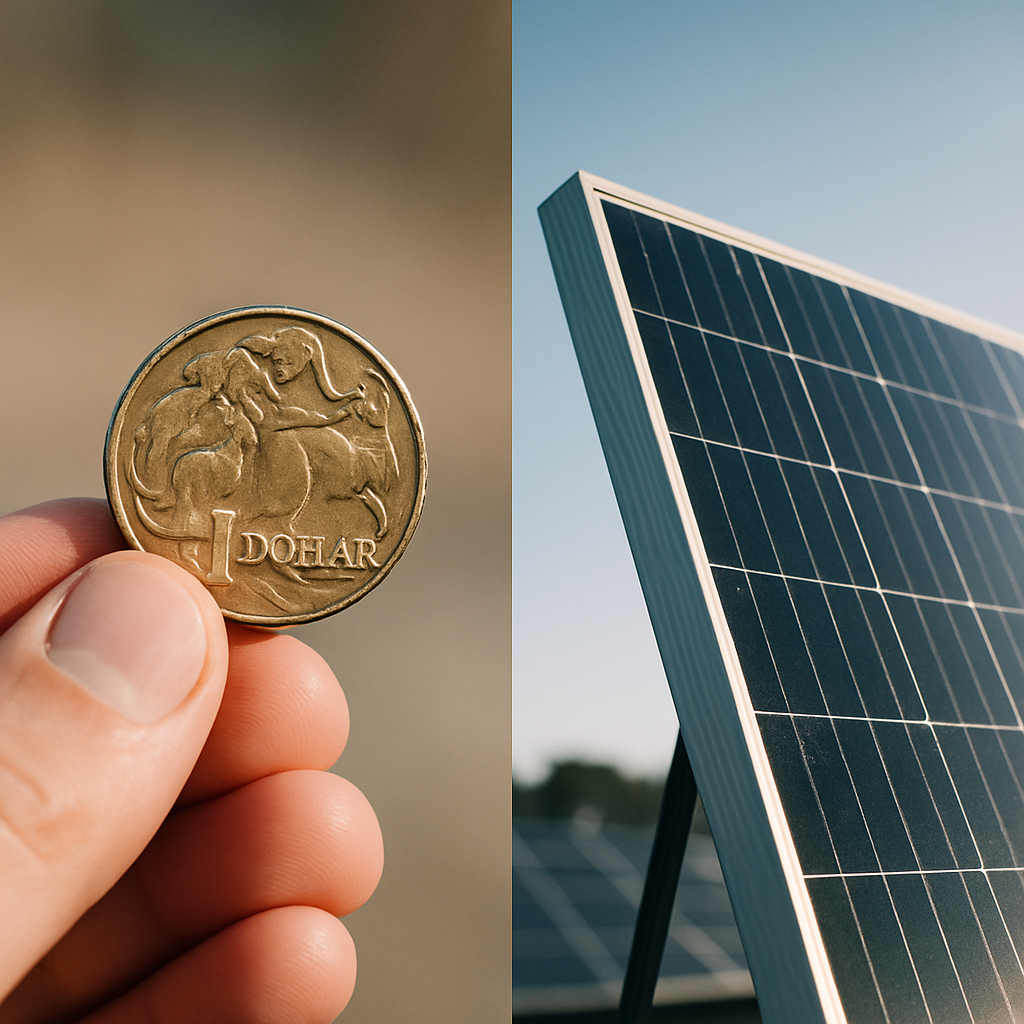
When quotes are sitting in front of you, it’s easy to get fixated on the final price. However, the long-term value of your investment depends on the quality of the components and the installation. Here are the critical factors I always compare:
-
Solar Panels: Look at the manufacturer, the efficiency rating, and the warranties. A panel comes with two warranties: a product warranty (covering defects, typically 15-25 years) and a performance warranty (guaranteeing a certain output after 25 years). The product warranty is far more important.
-
Inverter: This is the heart of your system, converting the DC power from your panels to the AC power your home uses. Look for trusted brands with a strong Australian presence for warranty support. The warranty is typically 5-10 years.
-
System Sizing vs. Your Consumption: A good quote will reference your recent power bills to recommend a system size (e.g., 6.6kW) that matches your energy usage. A quote that pushes a huge system without asking about your consumption habits is a red flag.
-
Installer Quality: The quote should clearly state that the installation will be done by an SAA-accredited installer. Look for reviews and ask how long they’ve been in business. A quality installation is crucial for both safety and performance.
-
Warranties: Beyond the panels and inverter, check for a workmanship warranty. This covers the installation itself and is typically around 5-10 years. It shows the installer stands by their work.
Important questions to ask Sydney solar installers
Before you sign anything, it’s vital to have a direct conversation with the installer. This is your chance to gauge their expertise and professionalism. A common mistake I see homeowners make is not asking enough specific questions.
Here are the questions I always recommend you ask:
-
Who will be performing the installation? Will it be your own employees or subcontractors?
-
What is your SAA accreditation number?
-
Can you walk me through the warranty claim process if a component fails? Who is my point of contact?
-
Does the quoted price include all costs, including any necessary switchboard upgrades and safety certificates?
-
How do you calculate the estimated savings and payback period on my quote? What electricity price and self-consumption rate have you assumed?
-
What happens if my roof is damaged during the installation?
-
How long will the installation take, and when can you schedule it?
Their answers will reveal a lot about their business practices and commitment to customer service.
Understanding solar power warranties and consumer rights in Australia
Navigating warranties can be confusing, but your rights as a consumer are strong. Under Australian Consumer Law, products must be of acceptable quality and fit for purpose. This law exists on top of any manufacturer warranties and is your ultimate protection.
Here’s a breakdown of the key warranties you’ll receive:
-
Panel Product Warranty: Covers defects in the panel itself. This is the most important panel warranty. Look for 15 years as a minimum; premium panels offer 25 years.
-
Panel Performance Warranty: Guarantees the panel will still produce a certain percentage of its original output (usually over 80%) after 25 years.
-
Inverter Warranty: Typically 5 years as standard, with many reputable brands offering an extension to 10 years.
-
Workmanship Warranty: This comes from your installer and covers the quality of the installation work itself. A 5 or 10-year workmanship warranty is a sign of a quality installer.
Crucially, Australian Consumer Law states that your retailer—the company that sold you the system—is responsible for handling warranty claims. They cannot simply tell you to contact the manufacturer overseas. This is why choosing an established installer with a local presence is so important.
Comparing solar panel and inverter brands available in Sydney
The brands included in your quote will have the biggest impact on your system’s performance and lifespan. Here’s a look at some of the reputable options you’re likely to see in Sydney, broken into tiers.
Solar Panels
| Tier | Brands | Key Features |
|---|---|---|
| Premium | REC | High efficiency, excellent performance in heat, and a strong 25-year product warranty. |
| Great Value | Trina, Jinko, Canadian Solar | These brands offer a fantastic balance of performance, reliability, and cost. They are among the most popular choices in Australia for good reason, with product warranties often hitting 25 years. |
Solar Inverters
| Tier | Brands | Key Features |
|---|---|---|
| Premium | Fronius | Austrian-made, known for reliability and excellent performance. Often considered the top choice by installers. |
| Great Value | Sungrow, GoodWe | Offer exceptional performance and reliability at a more accessible price point. Sungrow, in particular, has a strong reputation in Australia and pairs seamlessly with its popular battery range. |
| Microinverters | Enphase | A different approach where a small inverter is attached to each panel. Excellent for complex roofs with shading issues, but comes at a higher cost. |
Gigi’s Pro Tip: When comparing panel warranties, focus on the product warranty, not just the 25-year performance warranty. A 25-year product warranty from a brand like REC or Trina shows immense confidence in their manufacturing quality.
Calculating return on investment for solar panels in Sydney
To work out your return on investment (ROI), you need to compare the cost of the system against your annual savings. The payback period is simply the total cost divided by your annual savings.
Here’s a simplified calculation:
- Find Your Annual Savings: This is the sum of the electricity you no longer have to buy from the grid (your “self-consumption”) and any money you earn for exporting excess power (your “feed-in tariff”).
- Self-Consumption Savings: (Solar energy you use x Price of electricity) = Savings. For example, if you self-consume 3,000 kWh a year and electricity costs 33c/kWh, you save $990.
- Feed-in Tariff Earnings: (Solar energy you export x Feed-in tariff rate) = Earnings. If you export 4,000 kWh a year at a 7c/kWh tariff, you earn $280.
- Total Annual Savings: $990 + $280 = $1,270.
- Calculate Payback Period: (System Cost / Annual Savings) = Payback Period. For a $6,500 system: $6,500 / $1,270 = 5.1 years.
Case Study: A Family in Parramatta The Chen family was dealing with quarterly power bills approaching $550. They installed a 6.6kW system using Trina panels and a Sungrow inverter for $6,200 after the STC rebate. By shifting their pool pump and dishwasher timers to run during the day, they increased their self-consumption to over 40%. Their annual savings are now just over $1,300, putting them on track for a payback period of under 5 years, and their last bill was under $100.
Clean Energy Council accredited solar installers Sydney list

A quick but important update: the accreditation body for solar installers and designers in Australia has transitioned from the Clean Energy Council (CEC) to Solar Accreditation Australia (SAA). While you might still see “CEC accredited” mentioned, all current and new accreditations are managed by SAA.
To ensure your installer is properly accredited, which is a requirement for receiving government rebates, you can verify their details on the SAA website. They maintain a public list of accredited individuals. When you get a quote, the company should provide you with the SAA accreditation number of the person who will be designing and installing your system.
If you’re looking for a trusted local expert, I can help. I can connect you with pre-vetted, SAA-accredited installers in your area.
NSW government solar rebates and incentives 2025
For Sydney residents, the main financial incentive is the federal Small-scale Renewable Energy Scheme (SRES). This isn’t a cash rebate but an upfront discount on the system’s cost, provided through Small-scale Technology Certificates (STCs). For a 6.6kW system in Sydney, this typically cuts the price by around $2,100 to $2,200. Your installer will handle the paperwork and include this discount in your quote.
While the main solar panel rebate program for low-income households has closed, there are excellent incentives for batteries:
-
NSW VPP Incentive: If you install a battery and connect it to a Virtual Power Plant (VPP), you can receive an incentive of up to $1,500. VPPs help stabilise the grid, and you get rewarded for participating.
-
Federal Cheaper Home Batteries Program: This federal program can be combined with the NSW incentive and provides a significant discount based on the battery’s size. For a 13.5kWh battery, this could be worth up to $4,000.
These combined battery incentives make adding storage to your solar PV system more affordable than ever.
Average cost of a 6.6kW solar system in Sydney 2025
The 6.6kW solar system is the most popular size for residential homes in Australia. In Sydney, you can expect the cost of a good quality, fully installed 6.6kW solar system to be between $5,000 and $8,000 in 2025. This price is after the federal STC rebate has been applied.
Here’s what influences that price range:
-
Quality of Components: Systems with premium panels (like REC) and inverters (like Fronius) will be at the higher end of the range.
-
Installer Reputation: More experienced installers with strong warranties may charge more than newer, less proven companies.
-
Installation Complexity: Costs can increase for multi-storey homes, difficult roof materials (like tile), or if your switchboard needs an upgrade to meet current standards.
Be wary of quotes that come in significantly under this range, as they may be cutting corners on component quality or installation standards.
Red flags to look for in a solar installation quote
I spoke with an SAA-accredited installer last week, and they highlighted that spotting red flags early is key to avoiding problems later. Here’s what to watch out for:
-
High-Pressure Sales Tactics: Aggressive “sign today only” deals are a major warning sign. A reputable company will give you time to consider your options.
-
Vague or Unspecified Components: The quote should list the exact make and model of the solar panels and inverter. If it just says “Tier 1 panels,” ask for specifics.
-
Lack of SAA Accreditation: If they can’t provide a valid SAA accreditation number for the installer and designer, walk away.
-
No On-Site Inspection: A quote given over the phone without a proper inspection of your roof and switchboard may lead to unexpected costs later.
-
Outsourcing to Unknown Subcontractors: You need to know who is actually coming to your home to do the work. Reputable companies will have in-house teams or a regular, trusted group of subcontractors.
How to calculate solar panel payback period in Sydney
The payback period is the time it takes for your savings on electricity bills to equal the initial cost of your solar system. As shown in the ROI section, the formula is:
System Cost ÷ Annual Savings = Payback Period (in years)
To calculate this accurately for your Sydney home:
- Determine Your System Cost: This is the final price on your quote after all rebates are deducted. Let’s use $6,500 for a 6.6kW system.
-
Estimate Your Annual Savings:
-
Electricity Usage: Check your power bills for your average daily usage in kWh. Let’s say it’s 20 kWh.
-
Electricity Cost: The average usage rate in Sydney is around 33c/kWh.
-
Feed-in Tariff: This varies but is typically around 5-8c/kWh in NSW. Let’s use 7c/kWh.
-
Self-Consumption: Assume you will use 35% of the solar power generated directly. A 6.6kW system in Sydney produces about 25 kWh per day.
-
Solar power used: 25 kWh x 35% = 8.75 kWh
-
Solar power exported: 25 kWh – 8.75 kWh = 16.25 kWh
-
Daily Savings: (8.75 kWh x $0.33) + (16.25 kWh x $0.07) = $2.89 + $1.14 = $4.03
-
Annual Savings: $4.03 x 365 = $1,471
-
Calculate the Payback Period: $6,500 ÷ $1,471 = 4.4 years.
This is a simplified example, but it shows that with current system prices and electricity rates, a payback period of under 6 years is very achievable in Sydney.
Feeling ready to take the next step? If you’d like a hand, I can connect you with trusted local installers to provide an obligation-free quote for your home.