Fast Read
Yes, there’s a good chance you will need a switchboard upgrade for a solar battery installation in Brisbane, especially if your home was built before the early 2000s. An upgrade is required if your current board uses old ceramic fuses, lacks modern safety switches (RCDs), or doesn't have enough physical space for new solar and battery circuits. Expect the switchboard upgrade cost to be between $800 and $2,100. This is in addition to the solar battery price, which typically ranges from $9,000 to $16,500 for a quality system like a Sungrow SBR or Tesla Powerwall 3 before any government rebates are applied.
Solar battery installation switchboard requirements in Brisbane
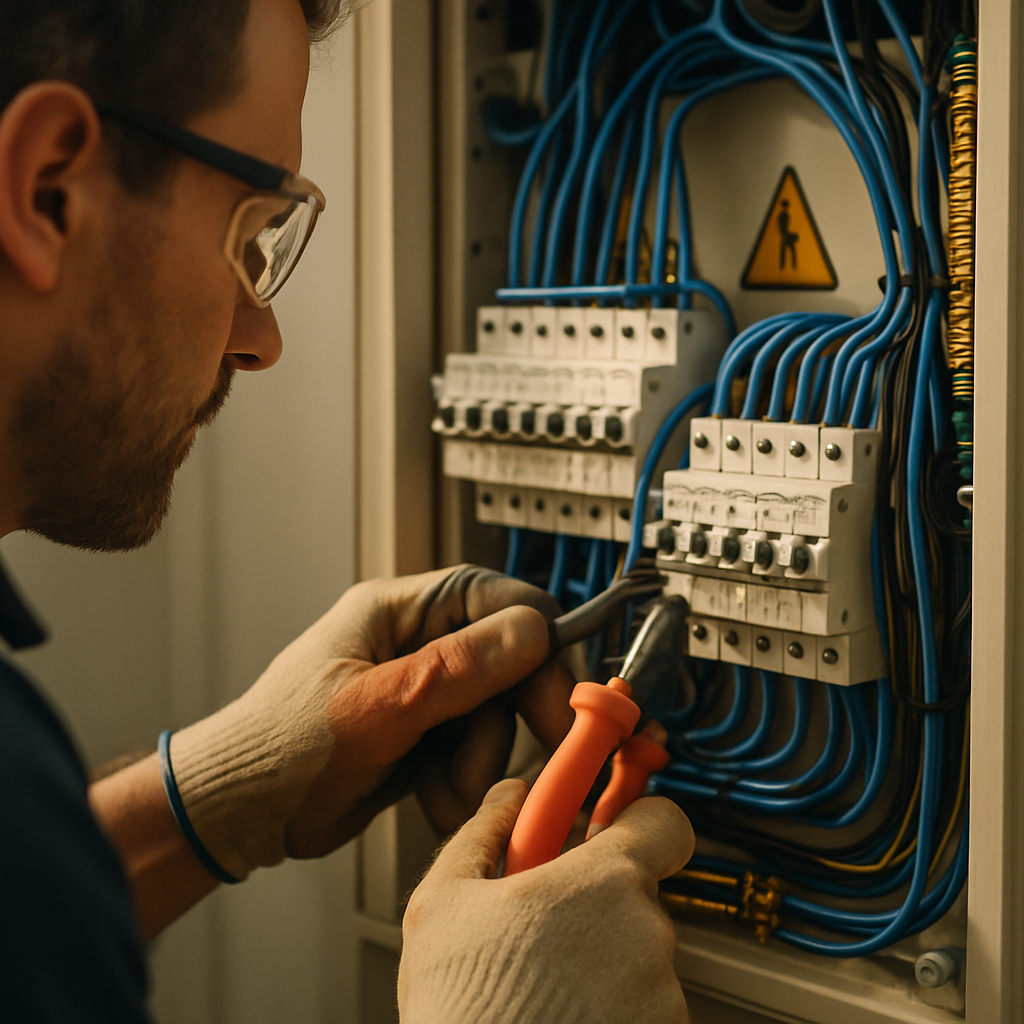
When you decide to add a solar battery to your Brisbane home, you’re not just plugging in an appliance; you’re fundamentally changing how your home interacts with the electricity grid. Your switchboard is the gateway for all this activity. To do this safely, it must be up to modern standards.
A battery system adds a new, significant electrical load and source of generation. The switchboard needs to be able to safely manage the two-way flow of energy—from the grid to your house, from your solar panels to the battery, and from the battery to your house.
Key requirements for a battery-ready switchboard include:
- Sufficient Physical Space: A solar and battery system requires new circuit breakers for the inverter and the battery itself. Older boards are often too small to accommodate this new equipment.
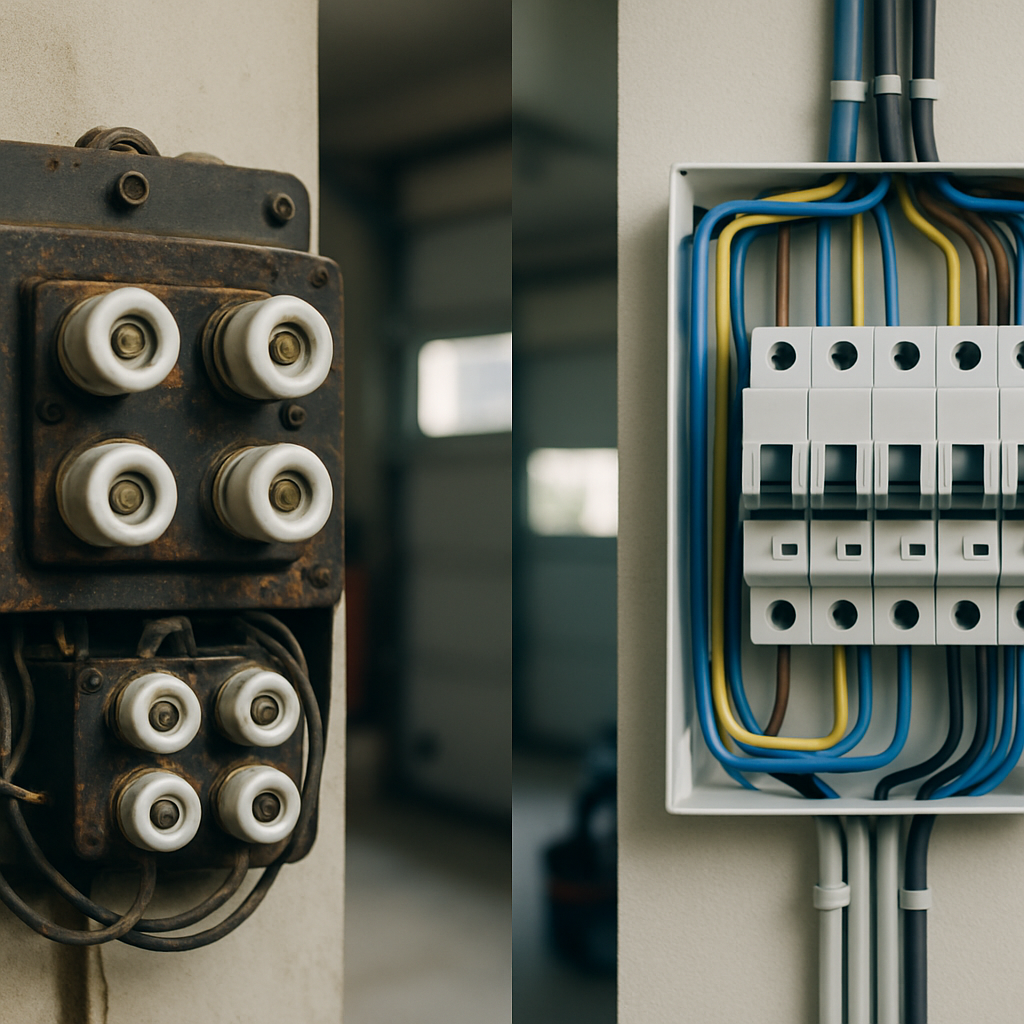
- Modern Safety Switches: The board must have modern circuit breakers and safety switches, also known as Residual Current Devices (RCDs), on all relevant circuits as required by Australian Standards. Old-style ceramic, rewireable fuses are an immediate red flag and must be replaced.
- Correct Capacity: The main switch and internal wiring (busbars) must be rated to handle the extra load from the battery charging and discharging, especially during a blackout when it might be supporting key circuits.
- Compliance with Standards: All work must adhere to the national “Wiring Rules” (AS/NZS 3000) and specific standards for battery installation (AS/NZS 5139).
When is a switchboard upgrade required for a solar battery installation in Brisbane?
From my analysis of dozens of system quotes, a switchboard upgrade is one of the most common—and necessary—add-ons for solar battery installations in older Brisbane homes. You will almost certainly need an upgrade if your home:
- Was built before the 1990s: Homes from this era often have switchboards that cannot cope with modern energy demands, let alone the addition of solar and battery storage.
- Has ceramic rewireable fuses: These are outdated and pose a significant fire risk. They do not meet current safety standards and any major electrical work, like a battery installation, will legally require them to be upgraded to circuit breakers and RCDs.
- Lacks RCD safety switches: Modern standards mandate RCD protection on circuits. If your board doesn’t have them, an upgrade is non-negotiable for safety.
- Has an asbestos panel: Many older switchboards were mounted on asbestos-containing panels. This is a serious health hazard that requires specialist removal and replacement.
- Doesn’t have space: Your installer needs to add new breakers for the solar and battery systems. If there are no spare slots in your existing board, you’ll need a larger enclosure.
Essentially, if your switchboard looks old, it probably is. An SAA-accredited installer will assess your board during the initial site visit and confirm if an upgrade is needed for your specific circumstances.
Energex switchboard requirements for a solar battery
In Brisbane, Energex is the distributor that manages the electricity network. They need to approve any system that connects to their grid to ensure its safety and stability. While your installer will handle the application process, they must follow Energex’s technical requirements.
For a solar and battery system, Energex’s primary concerns are:
- Compliance with Australian Standards: Your entire installation, including the switchboard, must comply with all relevant standards like AS/NZS 3000 and AS/NZS 4777 (for inverters).
- Clear Isolation Points: The switchboard must have clearly labelled main switches for the solar and battery systems. This allows Energex technicians or emergency services to safely disconnect your system from the grid if needed.
- Accurate Metering: Your electricity meter will be upgraded to a “smart” or bi-directional meter that can measure energy flowing in both directions. The switchboard needs to be configured to accommodate this new meter.
Your installer will submit a connection application to Energex detailing your system’s specifications. Energex provides a “Connection Offer” once it confirms the system meets all requirements, giving the green light for installation.
Queensland electrical safety regulations for a solar battery switchboard
The Queensland Government, through the Electrical Safety Office (ESO), sets the rules to protect homeowners and electrical workers. The Electrical Safety Regulation 2013 is a key piece of legislation governing this work.
When installing a battery, your switchboard upgrade must ensure:
- All work is performed by a licensed electrician: This is a legal requirement.
- Safety switches are installed correctly: Regulations mandate the installation of safety switches to protect against electric shock.
- The installation is certified: Upon completion, you must receive a Certificate of Testing and Compliance, confirming the work is safe and meets all regulations.
The ESO also provides guidance on the safe location for battery installations, recommending a risk assessment is conducted by the installer to determine the best placement. Critically, Australian Standards prohibit installing batteries in habitable rooms.
AS/NZS 3000 requirements for residential solar battery installation
The Australian/New Zealand Standard AS/NZS 3000, known as the “Wiring Rules,” is the foundational document for all electrical work in Australia. Any switchboard upgrade must comply with it.
For a solar and battery installation, key rules include:
- RCD Protection: The standard mandates that all final sub-circuits in a residential home, including those for new appliances, must be protected by a 30mA RCD safety switch. This includes circuits connected to your solar and battery system.
- Switchboard Accessibility: The rules specify minimum clearance distances around a switchboard to ensure it can be safely accessed and worked on. For a domestic installation, a minimum clear space of 0.6 metres is generally required in front of it.
- Proper Circuit Separation and Labelling: The new circuits for your solar and battery systems must be clearly separated from existing circuits and labelled correctly so anyone can understand the board’s layout.
Gigi’s Pro Tip: When your electrician is upgrading the switchboard, ask them to check for an old asbestos backing panel. This was a common building material in Brisbane homes built before 1990. Safe removal by a licensed professional is crucial and something you want to get done at the same time as the electrical work to minimise costs and disruption.
Signs your Brisbane home needs a switchboard upgrade for a solar battery
Even before you get a quote, your home might be giving you clues that your switchboard is due for a replacement. A switchboard upgrade isn’t just for solar; it’s a critical safety update for your entire home.
Look out for these warning signs:
- Flickering or dimming lights: This can happen when you turn on a large appliance and indicates the switchboard is struggling with the electrical load.
- Frequently tripping circuits or blowing fuses: A classic sign of an overloaded or faulty system.
- Old ceramic fuses: If you see white, ceramic-style fuses that you can pull out, your switchboard is dangerously outdated.
- A burning smell or discolouration: Any burning smell or scorch marks around the switchboard is a serious fire hazard. Contact an emergency electrician immediately.
- Buzzing or crackling sounds: These noises can indicate loose wiring or failing components, which is another urgent safety issue.
| Old (Needs Upgrade) | Modern (Battery Ready) |
|---|---|
| Ceramic, rewireable fuses | Circuit breakers (switches) |
| No RCD safety switches | RCD/RCBOs on all circuits |
| Asbestos or timber backing | Metal, fire-rated enclosure |
| Crowded, messy wiring | Neat wiring with room for expansion |
| No space for new circuits | Spare slots available |
Cost of a switchboard upgrade for a solar battery in Brisbane
The cost of a switchboard upgrade in Brisbane typically ranges from $800 to $2,100. Most standard residential upgrades for solar readiness fall within the lower end of this range, around $800 to $1,500.
Factors that influence the final price include:
- The complexity of the job: A simple replacement of an existing board is cheaper than a job that requires moving the switchboard or significant rewiring.
- Single-phase vs. three-phase power: Most Brisbane homes have single-phase power. Upgrading a three-phase board is more expensive.
- Asbestos removal: If an old asbestos panel needs to be removed, this requires a specialist and will add to the cost.
- The need for a full rewiring: In very old homes with degraded wiring, a much more expensive full property rewire might be recommended for safety, which can cost between $4,000 and $8,000.
> Case Study: A Family in The Gap > The Kumar family was facing quarterly power bills of over $600. They installed a 6.6kW system with Trina panels and a 10kWh Sungrow SBR battery. Their home, built in 1988, had its original switchboard with no safety switches. The total cost included a $1,200 switchboard upgrade, bringing the package to $16,200. After the federal solar rebate, their final cost was closer to $13,000. Their annual savings are now over $2,300, putting them on track for a payback period of under 6 years, and they barely notice when the grid goes down during a storm.
Finding a CEC accredited electrician for battery storage installation in Brisbane
This is a crucial point: the accreditation body for solar and battery installers has changed. The Clean Energy Council (CEC) is no longer the primary accreditation body. To ensure your system is safe, performs correctly, and is eligible for government rebates, you must use an installer accredited by Solar Accreditation Australia (SAA).
When choosing an installer, always:
- Ask for their SAA accreditation number: You can verify their status on the SAA website.
- Check for a Queensland Electrical Contractor Licence: This is a separate, mandatory licence for any electrical work in the state.
- Get multiple quotes: This allows you to compare not just the cost of a switchboard upgrade, but the quality of the proposed components and the installer’s experience.
Making sure your home’s electrical system is safe and ready is the first step toward energy independence. A switchboard upgrade might feel like an unexpected cost, but it’s a vital investment in the safety and future-readiness of your home.
If you’re feeling overwhelmed and want to ensure you’re getting the right advice, I can connect you with a trusted local expert. They can provide a clear assessment and an obligation-free quote for your home.