Fast Read
Yes, you can absolutely power your electric vehicle in Queensland using a home solar power system. To do this effectively, you'll typically need a solar system of at least 6.6kW and a dedicated smart EV charger that can divert your excess solar power into the car's battery. The total cost for a solar EV charger installation in Brisbane can range from $1,200 to over $3,300, depending on the charger model and the complexity of your home's wiring.
How many kW solar system to charge an EV in QLD?
First, let’s get the numbers straight. The size of the solar power system you need depends on two key things: how much you drive and how much electricity your home already uses.
An average EV in Australia consumes about 17 kWh of electricity to travel 100 kilometres. If you drive around the Queensland average, you’ll need a decent amount of solar generation to cover it.
To figure out your needs, let’s look at some typical driving habits.
- Average daily kilometres driven Queensland: Data for Queensland shows that the average work commute distance can be around 17.6 km each way. A report on South East Queensland specifically puts the average commute at 17.5km. Let’s round that up to about 40 km per day for a return trip to work, plus a few extra errands.
Based on driving 40 km a day, your EV would use approximately 6.8 kWh of energy (40 km x 17 kWh / 100 km).
A standard 6.6kW solar power for homes system in Brisbane generates about 26 kWh of electricity per day on average throughout the year. After powering your home’s typical daytime usage, a system of this size should comfortably generate enough excess energy to cover a 40 km daily drive.
However, if you have a larger family, a pool pump, or use a lot of power during the day, you might need a bigger system. Many households looking to cover both their home and EV charging needs are now installing 10kW to 13kW solar systems to be safe.
Solar for powering an electric vehicle QLD: Your setup options
Charging your EV from solar isn’t just about having panels on the roof. You need a way to get that solar energy into your car. While you can use a standard power outlet, it’s incredibly slow, adding only about 10 km of range per hour.
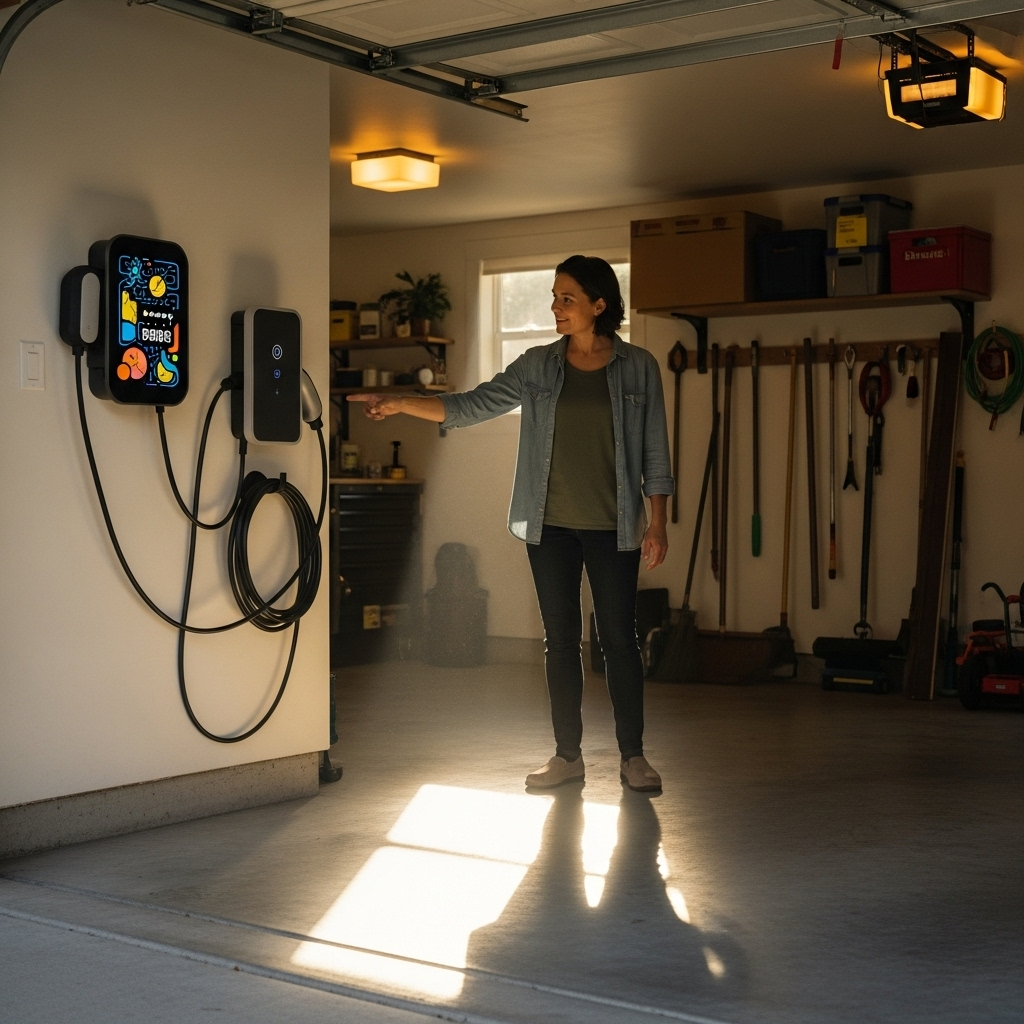
A much better solution is a dedicated Level 2 EV charger, also known as a wallbox. These are hardwired into your home by an electrician and can charge your car much faster, typically adding 40-50 km of range per hour.
The best option for solar owners is a “smart” solar EV charger. These chargers can monitor your home’s energy usage and your solar production in real-time. They automatically divert only the excess solar power that would otherwise be exported to the grid into your EV. This means you are using 100% free, clean energy to power your car.
Solar EV charger installation cost Brisbane
So, how much does it cost to get set up? The price can be split into two parts: the charger itself and the installation labour.
- Electric Vehicle Charger Cost: The price of the charger unit itself can range from $500 to over $2,000. More expensive models typically offer more advanced features like solar tracking, app connectivity, and higher charging speeds.
- Installation Cost: A standard installation by a qualified electrician in Brisbane generally costs between $700 and $1,300.
In total, you can expect the installed cost of a home EV charger in Brisbane to be between $1,200 and $3,300.
Gigi’s pro tip: This cost can increase if your home needs a switchboard upgrade to handle the extra electrical load, or if the charger is located a long way from your switchboard. Always get a detailed quote from an SAA-accredited installer.
Queensland government solar rebates for EV owners
This is a key point for Queenslanders: as of October 2025, the generous state government rebate of up to $6,000 for purchasing a new EV has ended. The scheme was fully exhausted and there are currently no plans for a new round of funding.
Similarly, there are no specific Queensland government rebates available for the installation of home EV chargers for private residences. The state’s funding has been directed more towards expanding the public charging network.
However, you can still take advantage of the federal Small-scale Renewable Energy Scheme (SRES) when you install solar panels. This can reduce the upfront cost of your solar power system by several thousand dollars. For a 6.6kW system in Queensland, this “rebate” is typically around $2,500.
Best solar EV chargers Australia 2025
The market for electric vehicle chargers is growing quickly, but a few brands consistently stand out for their excellent solar integration capabilities.
- MyEnergi Zappi: This is often considered the top choice for solar households. It has built-in solar tracking and doesn’t require extra hardware to divert your surplus solar energy to your car.
- Evnex E2: A smart charger that offers excellent features for its price point, including solar integration via a supplied component.
- Ohme Home Pro: This charger is also great with solar and includes smart tariff support, which is useful if you’re on a flexible electricity plan.
When choosing, look for a charger that is compatible with your car, has good app control, and is backed by a solid warranty.
Solar feed-in tariff rates QLD 2025
A solar feed-in tariff is the small credit your electricity retailer pays you for any excess solar energy you export to the grid. In South East Queensland (on the Energex network), these rates are not fixed and vary between retailers, typically ranging from 3c to 10c per kWh in September 2025.
For regional Queensland (on the Ergon network), there is a set feed-in tariff, which for the 2025-2026 financial year is 8.66 cents per kWh.
However, the goal with an EV is to use your own solar power rather than exporting it. Every kilowatt-hour you put into your car from your roof saves you from buying that same energy from the grid at a much higher price (often 25-30c per kWh or more). This strategy, known as “self-consumption,” provides far greater savings than any feed-in tariff.
Home battery storage for EV charging Queensland
What if you work during the day and need to charge your EV at night? This is where home battery storage becomes a game-changer.
A solar power battery allows you to store the excess solar energy you generate during the day instead of exporting it. You can then use this stored energy to charge your car overnight, completely independent of the grid.
Sizing a battery for EV charging requires careful consideration. For an average household using 15-20 kWh of electricity daily, a 10 kWh battery is often a good starting point. However, if you add an EV that needs an extra 7-10 kWh for its daily commute, you’ll likely need a larger battery, perhaps in the 16-24 kWh range, to cover both your home’s overnight use and your car’s charging.
While the upfront cost of a solar power battery is significant, the Australian government is introducing a federal solar battery rebate from July 2025, which can help reduce the initial investment.
Ready to power your drive with sunshine?
Pairing solar power with an electric vehicle is one of the smartest investments you can make for your Queensland home. It reduces your carbon footprint, lowers your household running costs, and gives you a wonderful sense of energy independence.
If you’re ready to get a proper quote for a system tailored to your home and driving habits, I can introduce you to a trusted, SAA-accredited local expert—just fill out the form below.