Fast Read
A typical 10kWh solar battery can run essential appliances like a fridge, lights, internet router, and device chargers for at least 24 hours during a power outage. With mindful energy use, this can be extended. However, it won’t power your whole house, especially high-wattage items like air conditioners or electric ovens. A quality solar and battery system, such as a 6.6kW solar array with a Tesla Powerwall 3 or Sungrow SBR battery, costs between $10,000 and $15,000 in Australia after factoring in the federal battery rebate. This setup can provide significant bill savings and crucial backup power.
What can a solar battery run during a power outage?
A solar battery is your home’s energy reserve, and what it can run during a blackout depends entirely on two things: the battery’s capacity (measured in kilowatt-hours, kWh) and the power draw of your appliances (measured in watts, W).
Think of it like a bucket of water. The size of the bucket is your battery’s capacity, and each appliance you turn on is a tap drawing water from it.
During a solar battery power outage, your system’s inverter will instantly switch over to battery power for designated ‘essential’ circuits. A standard 10kWh battery, one of the most common sizes for Australian homes, is designed to keep the fundamentals running.
Here’s what you can confidently expect to power:
-
Refrigeration: Your fridge and freezer are top priorities. A modern, energy-efficient fridge uses about 1-2 kWh per day.
-
Lighting: LED lights are incredibly efficient. You could power multiple rooms with LEDs and barely make a dent in your stored energy.
-
Connectivity: Your internet modem and router use very little power, keeping you online to check for updates from providers like Ergon or Energex.
-
Device Charging: Laptops and mobile phones can be charged multiple times.
-
Entertainment: An LED television and a small sound system can run for several hours.
-
Small Kitchen Appliances: A microwave or toaster can be used sparingly.
The key is prioritising what you truly need. A solar battery provides peace of mind that your food will stay fresh and you won’t be left in the dark.
Appliances a single solar battery can run during a blackout

Let’s get specific. A single, popular battery like a Tesla Powerwall 3 (13.5kWh) or a Sungrow SBR (starting at 9.6kWh) provides substantial backup. When a power outage hits, a fully charged 10kWh battery can comfortably handle a combination of essential loads for a day or more.
Here’s a sample scenario of what a typical 10kWh battery could run over a 24-hour blackout with careful management:
| Appliance | Power Draw (Watts) | Daily Hours of Use | Daily Energy Use (kWh) |
|---|---|---|---|
| Refrigerator/Freezer | 150 W | 8 hours (cycling on/off) | 1.2 kWh |
| 5 LED Lights | 50 W | 6 hours | 0.3 kWh |
| Wi-Fi Router & Modem | 15 W | 24 hours | 0.36 kWh |
| Laptop Charging | 65 W | 4 hours | 0.26 kWh |
| Television (55″ LED) | 100 W | 4 hours | 0.4 kWh |
| Phone Charging x 2 | 20 W | 3 hours | 0.06 kWh |
| Microwave | 1200 W | 0.25 hours (15 mins) | 0.3 kWh |
| Total Estimated Use | 2.88 kWh |
As you can see, this essential usage is well within the capacity of a standard battery, leaving plenty of buffer. With mindful use, a 10kWh battery could last for a couple of days, especially if your solar panels can recharge it during daylight hours.
Case Study: A Family in The Gap, Brisbane The Kumar family was facing quarterly power bills of over $600. They installed a 6.6kW system with Trina panels and a 10kWh Sungrow battery for a total cost of $15,500. After the federal battery rebate, their outlay was closer to $11,500. Their annual savings are now over $2,200, putting them on track for a payback period of just over 5 years, and their last bill was only the daily grid connection fee. They recently weathered a four-hour power outage in Brisbane without even noticing, as their fridge, lights, and internet stayed on seamlessly.
Limitations of solar batteries for home power backup
While incredibly useful, solar batteries have limitations you need to understand.
-
Not a Whole-Home Solution (Usually): A standard battery installation is set up for “essential loads backup,” not to power your entire house as normal. Running everything at once would drain the battery very quickly. Whole-home backup is possible but requires a much larger, more expensive system, often 20-30kWh or more.
-
Inverter Capacity: The battery’s inverter has a maximum power output. If you try to run too many high-powered appliances at the same time, you can overload it, causing the system to trip. For example, the Tesla Powerwall 3 has a continuous power output of up to 11.04 kW, which is substantial but can still be exceeded.
-
Weather Dependency: During an extended outage, your ability to last depends on the sun. A few cloudy or rainy days can prevent your solar panels from fully recharging the battery, limiting how much power you have each night.
-
Requires Backup Configuration: Crucially, a solar battery does not automatically provide backup power. The system must be specifically installed and configured for this function with an inverter that has an Emergency Power Supply (EPS) or “islanding” capability. Always confirm this with your SAA-accredited installer.
How long can a solar battery power essential appliances?
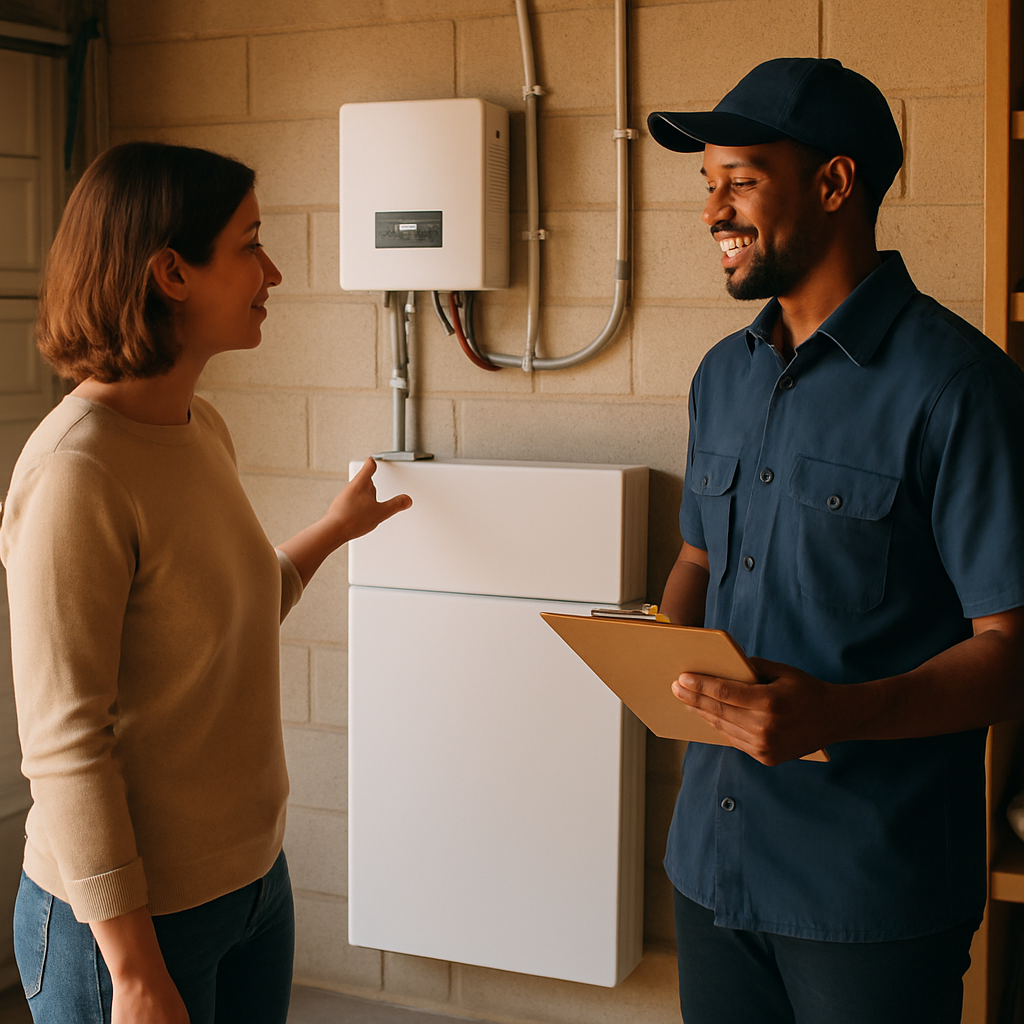
For a typical Australian household using 16-20 kWh per day, a 10kWh battery can power essential appliances for about 24 hours without any solar recharge.
Here’s a simple breakdown of longevity: Gigi’s Pro Tip:When comparing batteries, look beyond the total kWh capacity and ask for the ‘continuous power rating’ in kW. This tells you how much power the battery can deliver at any one moment, which determines if it can handle the startup surge of appliances like a fridge or a small pump. A higher rating means more flexibility during an outage.
-
Short Outages (<24 hours): A fully charged 10kWh+ battery will comfortably see you through. You can use your essential appliances with little worry.
-
Extended Outages (1-3 days): Success depends on management and weather. You’ll need to be conservative with your energy use and rely on sunlight to recharge the battery each day. If the sun is shining, your panels can recharge the battery while also helping to power your home, significantly extending your independence.
-
Prolonged Outages (>3 days): Without consistent sunshine to recharge, even a large battery will eventually deplete. This scenario highlights the importance of energy conservation during a long blackout.
High-wattage appliances not recommended for solar battery backup
Some appliances are simply too power-hungry for a standard home battery system. Running them during a power outage will drain your stored energy in minutes or hours, rather than days.
Avoid running these on battery power:
-
Electric Hot Water Systems: These can draw 2,400 to 4,800 watts and are one of the biggest energy users in the home.
-
Central Air Conditioning / Ducted Reverse Cycle: A central unit can use 3,000-5,000 watts per hour, which would drain a 10kWh battery in just two to three hours.
-
Electric Ovens and Cooktops: These can easily pull over 2,000 watts.
-
Electric Clothes Dryers: A huge power draw, often exceeding 3,000 watts.
-
Pool Pumps: While essential for the pool, they consume a lot of energy and are best left off during a blackout.
-
Kettles and Hair Dryers: Though used for short bursts, their high power draw (1,500-2,400 watts) can cause a significant dip in your battery.
If backing up some of these larger items is a priority, you will need to discuss a much larger battery setup (or multiple batteries) with your installer.
Calculating solar battery size for off-grid power needs
Sizing a battery correctly is crucial. The goal is to find a balance between having enough power, the solar battery cost, and the physical space required.
Here’s a simplified approach I use to help homeowners estimate their needs:
- Analyse Your Daily Energy Use: Look at your electricity bill to find your average daily consumption in kWh. The Australian average is around 16-20 kWh per household.
- Determine Your “Days of Autonomy”: Decide how many days you want to be able to run without grid power or sunshine. For backup power, 1-2 days is common. For a true off-grid system, 3-5 days is a safer bet.
- Factor in Depth of Discharge (DoD): Modern lithium batteries like the Tesla Powerwall or Sungrow SBR have a 100% DoD, meaning you can use their full advertised capacity. Older battery types have lower DoDs.
- Use the Formula: A basic formula to get a rough estimate is: Battery Capacity (kWh) = (Average Daily Energy Use × Days of Autonomy) / DoD
Example: For a home that uses 16 kWh daily and wants 2 days of backup with a battery that has a 1.0 (100%) DoD: (16 kWh × 2) / 1.0 = 32 kWh of battery capacity needed.
From my analysis of dozens of quotes, most families find a 10-15 kWh battery is the sweet spot for providing overnight power and crucial backup for a day or two, without over-investing.
Making the decision to invest in a solar with battery price can feel daunting, but understanding what it can—and can’t—do during a power outage is the first step to making a smart choice. If you want help getting tailored advice for your home’s specific needs, I can connect you with a trusted local expert. Just fill out the form below for a no-obligation chat.