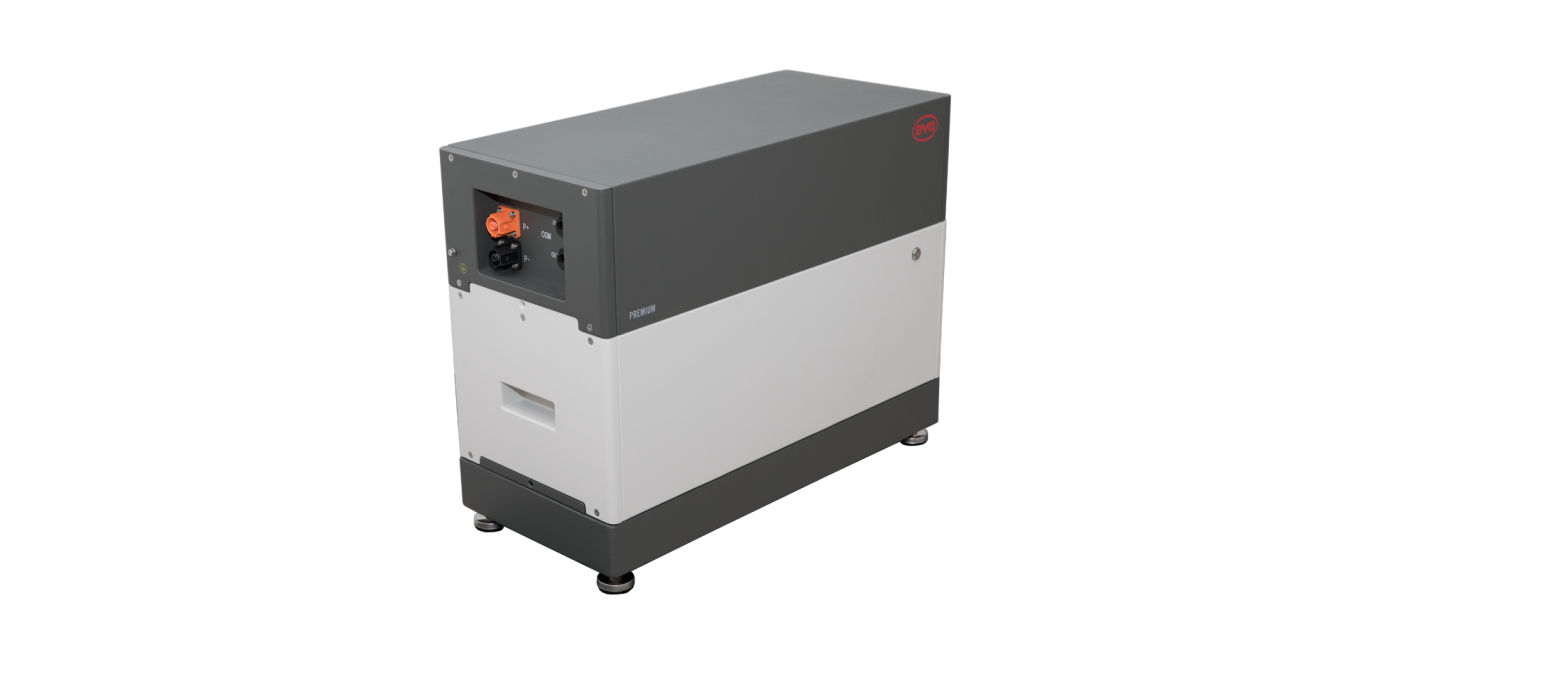
The BYD Battery-Box Premium LVS Lite 4.0 is a 48V Lithium-Ion battery storage system designed for residential use with a photovoltaic system. It is engineered for both on-grid and off-grid applications, offering flexibility for various energy needs. Capable of being installed both indoors and outdoors, this model provides a robust energy storage solution with an IP55 rating for its Battery Management Unit (BMU).
Please note: Specifications and pricing are subject to change. While TGND strives to provide accurate information, for a definitive and up-to-date quote, please use the form below to connect with an accredited professional.
The BYD Battery-Box Premium LVS Lite 4.0 is a popular choice in the Australian market, known for its modular design and reliable performance. For 2025, the typical installed cost for a single 4.0 kWh unit generally ranges from AUD $4,500 to $6,500. This price variation depends heavily on the complexity of the installation, the specific retailer, and the inclusion of a compatible inverter, which is a necessary additional component. The battery module itself is often priced between $2,500 and $3,500. Availability is generally good across Australia through a network of certified solar installers and retailers.
Comparison with Competitors
The BYD LVS Lite 4.0 faces stiff competition in Australia’s mature battery market. Its primary rivals include integrated solutions like the Tesla Powerwall 3 and other modular systems such as the Sungrow SBR series.
Feature
BYD Battery-Box Premium LVS 4.0
Tesla Powerwall 3
Sungrow SBR (9.6 kWh)
Usable Capacity
4.0 kWh
13.5 kWh
9.6 kWh (3 x 3.2 kWh modules)
System Type
Modular (DC Coupled)
All-in-One (DC Coupled)
Modular (DC Coupled)
Continuous Power
Dependent on Inverter
11.5 kW
Dependent on Inverter
Installed Price
$4,500 – $6,500
$13,500 – $15,500
$7,500 – $9,500
Chemistry
LFP (Lithium Iron Phosphate)
LFP (Lithium Iron Phosphate)
LFP (Lithium Iron Phosphate)
BYD Battery-Box Premium LVS 4.0: This is an excellent choice for homeowners who want to start with a smaller capacity and have the option to easily expand later. Its compatibility with a wide range of popular inverters (like Fronius) makes it a flexible addition to existing or new solar systems. It’s best for those prioritizing scalability and the safety of LFP chemistry.
Tesla Powerwall 3: Best for homeowners seeking a high-capacity, all-in-one solution with a powerful integrated solar inverter. Its higher upfront cost is justified by its large 13.5 kWh capacity and a much higher continuous power output of 11.5 kW, making it suitable for larger homes with significant energy demands, such as those with EV chargers. The Powerwall 3 also uses the safer LFP battery chemistry, similar to the BYD and Sungrow units.
Sungrow SBR: A strong competitor to the BYD system, offering a similar modular LFP design. The minimum system size is 9.6 kWh (consisting of three 3.2 kWh modules), making its entry point larger than a single BYD LVS 4.0 module. It is often cost-effective per kilowatt-hour and is the natural choice for those who already have or prefer a Sungrow hybrid inverter, creating a seamless single-brand ecosystem.
Expert & User Reviews
The BYD Battery-Box Premium LVS series is well-regarded in the Australian market, praised by both installation experts and homeowners for its reliability and flexible, modular design. The use of Lithium Iron Phosphate (LFP) chemistry is consistently highlighted as a major advantage, offering superior safety and a longer lifespan compared to other lithium-ion chemistries.
Pros:
Scalability:
Users frequently praise the modular “stack-and-play” design, which allows for easy and cost-effective capacity upgrades by adding more 4.0 kWh modules as household energy needs grow.
Safety: The cobalt-free LFP battery chemistry is considered one of the safest and most stable on the market, providing peace of mind for homeowners.
Inverter Compatibility: The battery is compatible with a wide range of popular and high-quality hybrid inverters, including brands like Fronius, SMA, and Sungrow, making it a flexible choice for new and existing solar systems.
Strong Manufacturer: BYD is a massive, vertically integrated company with a significant global presence in batteries and electric vehicles, which lends confidence in its long-term viability and warranty support.
Cons:
Requires Separate Inverter:
Unlike all-in-one solutions, the LVS Lite 4.0 requires a compatible hy
Source: bydenergia.com
brid inverter, which adds to the overall system cost and installation complexity.
Aesthetics: Some reviews note that the physical appearance is more industrial and less sleek compared to competitors like the Tesla Powerwall.
No Integrated Monitoring: Monitoring and control of the battery are handled through the inverter’s software or app, as BYD does not provide its own user-facing application.
References
Expert Review
SolarQuotes: BYD Battery Review – An in-depth expert review of BYD’s solar battery offerings, covering the company’s history, product range, performance, and warranty details.
SolarChoice: BYD Battery: Independent Review – This source provides an independent expert review of BYD batteries, including a scoring system based on price, trustworthiness, warranty, and functionality.
Get Battery Quotes: BYD Battery Review – This expert review assesses the BYD Battery-Box range, highlighting its safety, scalability, and suitability for Australian homes, especially when paired with quality inverters.
Hi, I’m Gigi! The girl who used to nod along when people threw around words like “kilowatt” and “inverter.” Now I’m the one asking the right questions and translating the answers for everyone else. The Girl Next Door is my way of making sustainable living less intimidating and a lot more doable.