Fast Read
The best solar panels for Queensland heat are those with a low temperature coefficient, typically N-type panels from premium brands like SunPower, REC, Jinko, and Trina. This single metric tells you how well a panel will perform as it gets hotter. In a climate where rooftop temperatures can soar, a panel that keeps its cool will generate more power and give you a better return on your investment over its lifespan.
Why Queensland’s heat is a challenge for solar panels
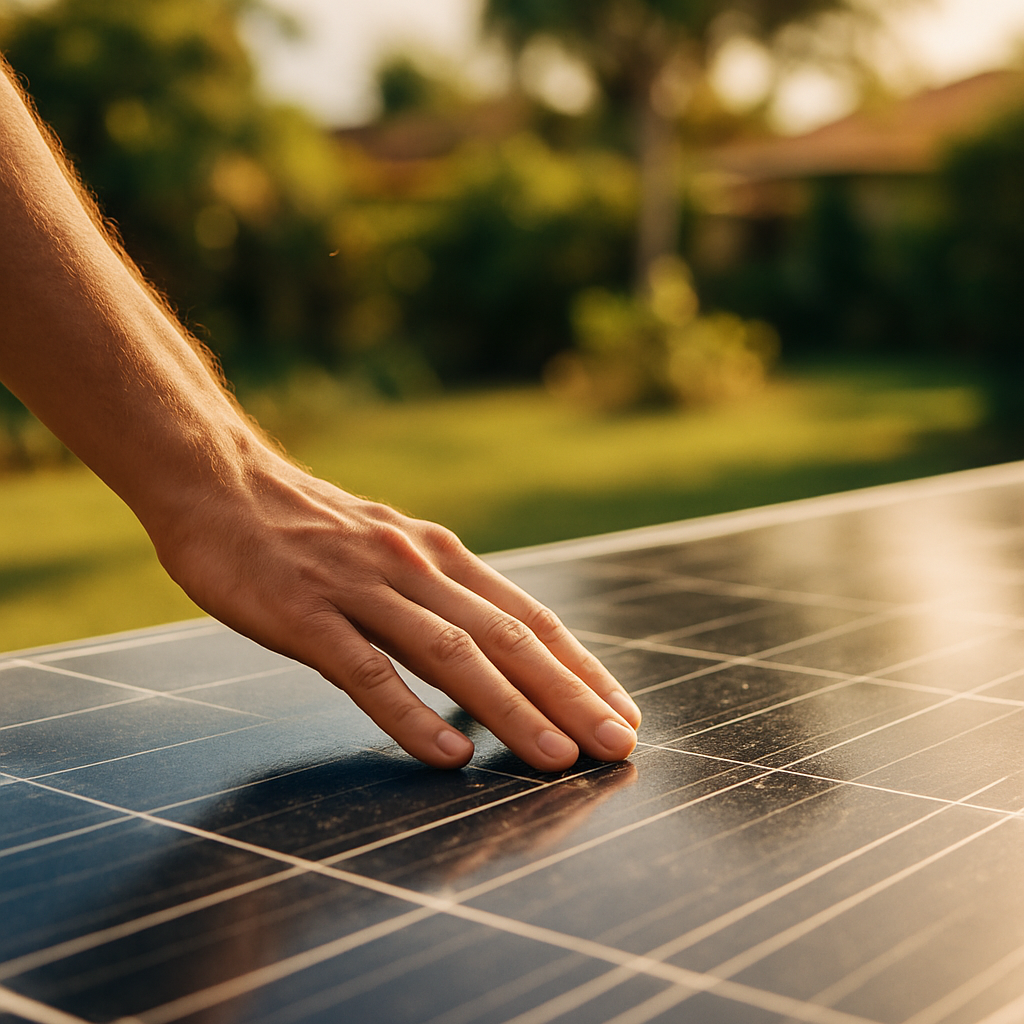
It’s a common misconception that solar panels love extreme heat. While they certainly need sunlight (irradiance) to generate electricity, their efficiency is actually highest at a surprisingly cool 25°C. For every degree above this, a panel’s power output drops by a specific percentage. This performance drop is known as the temperature coefficient.
Think of it like this: on a hot Queensland day, the air temperature might be 35°C, but the surface of your dark solar panels on a metal roof could easily reach 65°C or more. That’s a 40-degree jump above the ideal temperature.
A panel with a poor temperature coefficient (e.g., -0.40%/°C) would lose 16% of its output in these conditions (40°C x -0.40%). However, a high-performance panel with a better coefficient (e.g., -0.29%/°C) would only lose 11.6%. That difference adds up to a significant amount of lost energy and savings over 25 years.
Gigi’s pro tip: When you’re comparing quotes, don’t just look at the panel’s maximum power (wattage). Ask for the datasheet and check the ‘Temperature Coefficient of Pmax’. The closer this number is to zero, the better the panel will perform in our hot climate. Anything around -0.30%/°C or lower is excellent by today’s standards.
N-type vs P-type panels: Why it matters in the heat
Most of the top-performing panels for hot climates use N-type solar cells instead of the older P-type technology. Without getting too technical, N-type cells are made with a different doping process that makes them less susceptible to some forms of degradation and generally gives them a better temperature coefficient. This means they are inherently better suited to places like Queensland.
What are the best solar panels for Queensland heat?
When it comes to handling heat, a few brands consistently stand out for their superior technology and low temperature coefficients. I’ve dug into the specs of some of the most popular and respected brands available in Australia to see how they stack up.
SunPower Maxeon panels
SunPower has long been a premium choice, and their reputation is built on durability and performance. Their Maxeon panels are known for having one of the best temperature coefficients in the industry.
- Temperature Coefficient: The flagship SunPower Maxeon 6 panels have a very low coefficient of around -0.29%/°C.
- Durability: SunPower panels are also built on a solid copper foundation, making them highly resistant to corrosion, which is a big plus for coastal Queensland homes.
- Price: They are a top-tier option, so expect to pay a premium. Prices can range from $1.10 to $1.40 per watt.
- Warranty: SunPower offers an outstanding 40-year product and performance warranty, which is one of the longest in the industry.
REC Alpha panels
REC is another high-end European brand that has gained a strong following in Australia for its innovative technology and excellent performance in hot weather.
- Temperature Coefficient: The REC Alpha Pure-R series boasts an impressive temperature coefficient of around -0.26%/°C.
- Durability: REC panels perform well in coastal conditions and are known for their robust build quality.
- Price: They sit in the premium category, typically costing between $0.75 to $0.95 per watt.
- Warranty: They come with a 25-year product warranty and a 25-year performance warranty.
Jinko Solar Tiger Neo panels

Jinko Solar is one of the world’s largest manufacturers and offers a great balance of performance and affordability. Their N-type Tiger Neo range is very well suited to Australian conditions.
- Temperature Coefficient: The Jinko Tiger Neo series has a very competitive temperature coefficient, often around -0.30%/°C.
- Durability: These panels are a popular choice for large-scale and residential projects, with a solid reputation for reliability.
- Price: Jinko offers excellent value, making high-performance N-type technology more accessible for homeowners.
- Warranty: They typically offer a 15 or 25-year product warranty and a 30-year performance warranty.
Trina Solar Vertex S+ panels
Trina Solar is another global giant in the solar industry. Their Vertex S+ range uses N-type cells and is designed for high performance in residential settings.
- Temperature Coefficient: The Vertex S+ panels have a good temperature coefficient of approximately -0.30%/°C.
- Durability: Trina panels are known for their reliability and are a common sight on Australian rooftops.
- Price: Trina is very competitively priced, often falling in the range of $0.52 to $0.66 per watt, offering great value.
- Warranty: The Vertex S+ comes with a 25-year product warranty and a 30-year performance warranty.
Qcells solar panels
Qcells is a well-regarded brand known for its German engineering and rigorous testing. They offer a range of reliable panels that deliver solid performance.
- Temperature Coefficient: Qcells panels typically have a temperature coefficient in the range of -0.30% to -0.34%/°C.
- Durability: Qcells panels have a strong reputation for quality and undergo extensive testing for Australian conditions.
- Price: They are positioned as a mid-range to premium option, offering a good balance of cost and quality.
- Warranty: Qcells generally offers 25-year product and performance warranties.
LONGi Hi-MO 6 panels
LONGi is a major player known for its focus on high-efficiency monocrystalline cell technology. The Hi-MO 6 series is their popular offering for residential homes.
- Temperature Coefficient: The LONGi Hi-MO 6 has a temperature coefficient of around -0.29%/°C.
- Durability: LONGi has a good track record for producing reliable and high-performing panels.
- Price: They are very competitive on price, making them a popular choice for those seeking high efficiency without the top-tier price tag.
- Warranty: They typically come with a 15-year product warranty and a 25-year performance warranty.
What about hail and cyclones?
Living in Queensland, we also have to think about more than just heat. Hail and cyclones are serious considerations for anything we put on our roofs.
- Hail Resistance: Most modern solar panels are surprisingly tough. They are tested to international standards (IEC 61215) which involves firing 25mm diameter ice balls at them at over 80 km/h. Many premium panels go further, testing with larger hailstones to ensure they can withstand severe storm conditions.
- Cyclonic Conditions: Panels and their mounting systems sold in cyclone-prone regions of Australia must comply with specific standards to withstand extreme wind loads. Your installer is responsible for ensuring the entire system is secured to your roof according to these standards. Always choose an accredited installer who understands local requirements.
Watch-outs: The best panel in the world won’t protect you if it’s not installed correctly. I always recommend using a Solar Accreditation Australia (SAA) accredited installer who can ensure your system is safe, compliant, and designed to handle local weather conditions.
Making the right choice for your home
Choosing the best solar panels for your home comes down to balancing performance, durability, and budget. While premium panels from SunPower and REC often lead the pack in heat resistance and warranties, brands like Jinko, Trina, and LONGi now offer excellent N-type panels that provide fantastic performance at a more accessible price point.
If you’re ready for a proper quote, I can introduce you to a trusted, SAA-accredited local expert who can help you compare the right options for your roof and budget—just fill out the form below. For a quick, personalised estimate of solar costs and savings for your home, try the free solar assistant on this page—it gives you a ballpark in minutes.