Fast Read
To correctly size a solar system for an electric vehicle (EV) in Sydney, you’ll likely need to add an extra 3-5kW of solar capacity to your existing home setup. For a typical Sydney driver covering 30-40km daily, this means adding about 6-8kWh of extra energy generation. A 10kW solar system is often a great starting point for covering both average household use and EV charging. Key government incentives in 2025 include the federal Small-scale Technology Certificates (STCs), which can reduce upfront costs by over $3,000, and the NSW Peak Demand Reduction Scheme (PDRS), offering $1,600–$2,400 back on a solar battery like a Sungrow SBR or Tesla Powerwall 3.
Sizing your solar system for an electric vehicle in Sydney
So, you’re thinking about getting an electric vehicle to go with your solar panels, or perhaps the EV is the reason you’re looking at solar in the first place. It’s a smart move. Powering your car with sunshine you’ve generated on your own roof is one of the most satisfying and cost-effective ways to drive.
But it raises a crucial question: how big does your solar system need to be to handle both your home and your new EV? Undersize it, and you’ll still be paying for grid electricity to charge your car. Oversize it, and you’ve spent money on panels you don’t need. I’ve analysed the data and spoken with Solar Accreditation Australia (SAA) accredited installers to get you a clear answer for your Sydney home.
How to size a solar system for an EV in Sydney: The simple formula
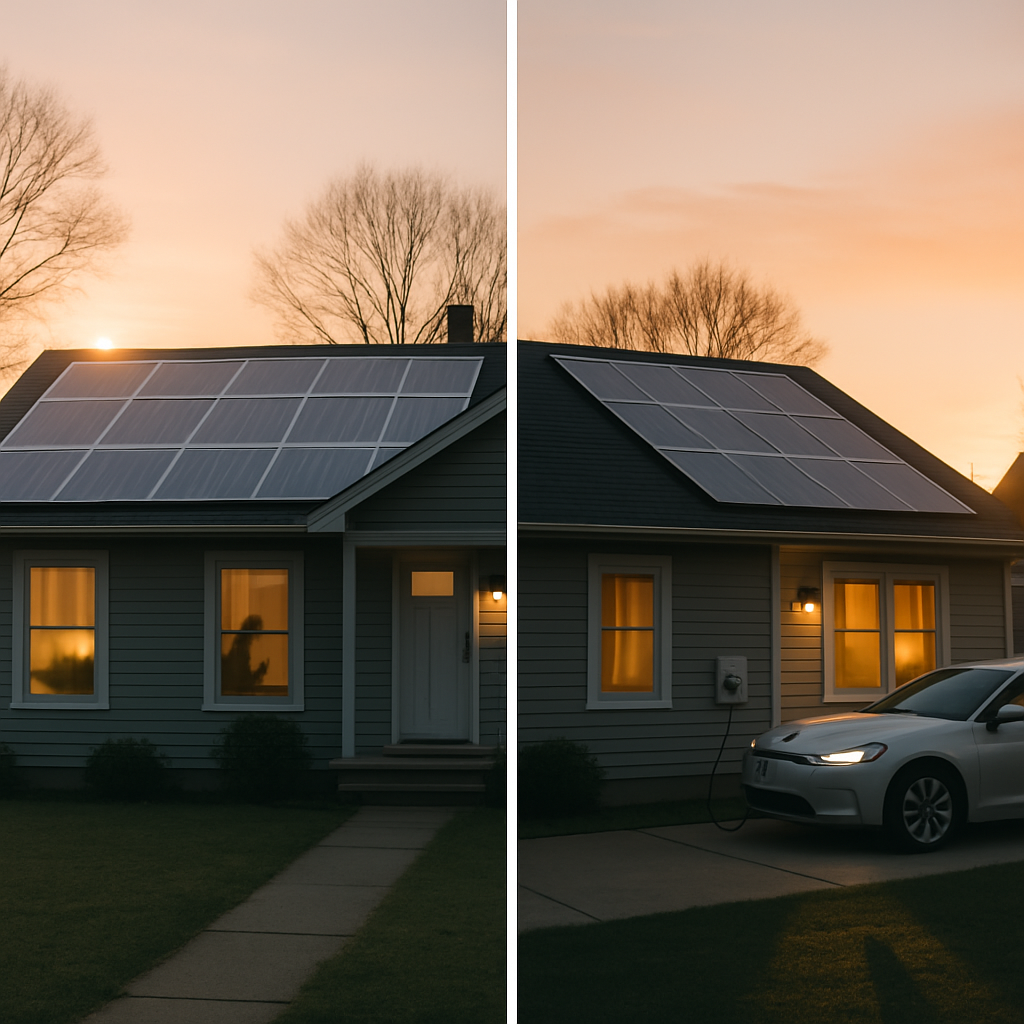
At its core, the calculation is straightforward. You need to figure out your total daily electricity consumption (home + car) and then match it with a solar system that can generate that much power on an average Sydney day.
The basic formula looks like this:
(Average Daily Home Energy Use + Average Daily EV Energy Use) / Average Daily Solar Generation per kW = Required Solar System Size in kW
Let’s break that down step-by-step.
Step 1: Figure out your EV’s daily energy needs
First, we need to work out how much extra electricity your EV will use each day. This depends on two things: how far you drive and how efficient your car is.
-
Average Daily Driving Distance in Sydney: While some commuters travel long distances, data from various sources suggests the average daily drive for a Sydney resident is around 30-40km. Some estimates based on insurance data put it as high as 55km. We’ll use 40km as a solid, slightly conservative figure for our calculation.
-
Average EV Efficiency: Most modern EVs consume between 15 kWh and 20 kWh of electricity to travel 100km. A Tesla Model Y might use around 16.5 kWh/100km, while a Hyundai Kona EV is similar. We’ll use an average of 18 kWh/100km.
With these numbers, we can calculate your EV’s daily charging needs: (40 km driven / 100 km) * 18 kWh =7.2 kWh per day
So, a typical Sydney EV driver needs to add about 7.2 kWh of energy to their daily household consumption.
Step 2: Calculate how much solar energy you can generate in Sydney
Now we need to know how much power a solar system can actually produce in Sydney. This isn’t a fixed number; it changes with seasons and weather. However, we can use a reliable average.
According to data from solar experts and the Clean Energy Council, every 1kW of north-facing solar panels in Sydney will generate an average of 3.9 to 4.2 kWh of electricity per day throughout the year. In summer, this can be as high as 6.7 kWh, while in winter it might drop to around 3.4 kWh. For year-round planning, using a figure of 4.0 kWh is a safe bet.
| System Size | Average Daily Generation in Sydney (kWh) |
|---|---|
| 5 kW | 20.0 kWh |
| 6.6 kW | 26.4 kWh |
| 8 kW | 32.0 kWh |
| 10 kW | 40.0 kWh |
| 13.3 kW | 53.2 kWh |
Gigi’s Pro Tip: Don’t just focus on north-facing panels. An east-west split can be fantastic for EV owners. East-facing panels will generate power in the morning to cover your home’s wake-up rush, while west-facing panels will still be producing energy in the late afternoon when you might get home and plug in your car.
Step 3: Putting it all together: Sizing your total system
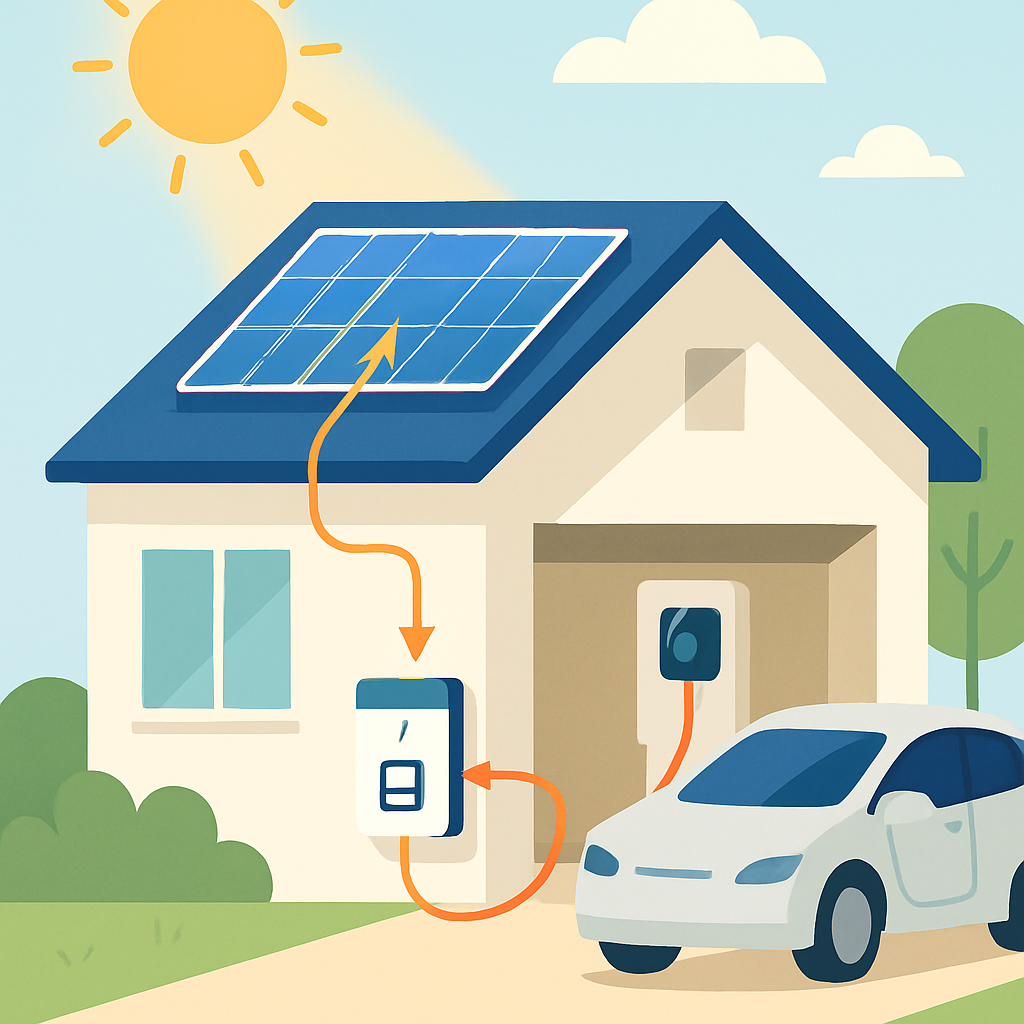
Now, let’s combine everything. First, check your latest power bill for your “average daily usage.” For a typical Australian family home, this is often around 20-22 kWh per day.
Let’s do the maths for a household that uses 20 kWh a day and now needs to add an EV:
-
Total Daily Need: 20 kWh (Home) + 7.2 kWh (EV) = 27.2 kWh
-
Required System Size: 27.2 kWh / 4.0 kWh (per kW of solar) = 6.8 kW
This calculation shows that a standard 6.6kW system, which is the most popular size in Australia, would just cover the combined load on an average day. However, to be safe and ensure you have enough power on cloudier days or during winter, I would recommend going larger. An 8kW or even a 10kW system is a much more robust and future-proof choice for a Sydney home with an EV.
Case Study: The Patels in Parramatta The Patel family’s quarterly electricity bills were consistently over $700 after buying their Kia EV9. They decided to install a 10kW solar system using Trina panels and a 10kWh Sungrow battery, with the installation costing them $18,000. After claiming the federal STC rebate for the panels and the new federal battery incentive, their out-of-pocket cost was closer to $13,500. Their last quarterly bill was just $55, and they now save over $2,500 a year. This puts their payback period at under 6 years, all while running their home and charging their car almost entirely from the sun.
If you are a high-energy user or want to be completely self-sufficient, a larger 13.3kW system might be the right fit. The key is to match your consumption habits with a system that has a little extra headroom.
Should I add a battery to my solar and EV system?
Adding a battery like a Tesla Powerwall 3 or a BYD Battery-Box is a significant extra cost, but it solves a key problem: most EV charging happens at night when solar panels aren’t working.
Without a battery, you have two choices:
-
Charge your EV during the day using your solar energy directly (great if you work from home).
-
Export your excess solar to the grid during the day for a small feed-in tariff (around 5-12c/kWh in NSW) and then buy electricity back from the grid at night to charge your car (at a much higher rate, often 30c/kWh or more).
A battery allows you to store your excess solar energy generated during the day and use it to charge your EV for free overnight. It gives you true energy independence and protects you from rising electricity prices.
Are there government incentives for solar and EVs in NSW?
Yes, there are several valuable incentives available in 2025 to make the switch more affordable.
-
Small-scale Technology Certificates (STCs): This is a federal government rebate that acts as an upfront discount on the cost of your solar panels. For a 10kW system in Sydney, this can reduce the price by over $3,000. The value of STCs decreases each year, so acting sooner provides a larger discount.
-
NSW Peak Demand Reduction Scheme (PDRS): For those installing a home battery, this NSW scheme provides a rebate of between $1,600 and $2,400, depending on the battery’s size. You can get an additional incentive for connecting it to a Virtual Power Plant (VPP).
-
Federal Cheaper Home Batteries Program: As of July 2025, a new federal program allows battery installations to create STCs. This can result in a discount of 10-15% on the cost of an installed battery, making the investment in energy storage more attractive.
These incentives significantly improve the financial case for investing in a complete solar, battery, and EV charging solution.
Making the right choice for your Sydney home
Sizing your solar system to include an EV is a balancing act, but the maths is on your side. For most Sydney drivers, adding an extra 3-5kW of solar panels to a standard household system provides the perfect amount of energy to power both your home and your travels.
Feeling overwhelmed by the numbers? It’s completely normal. This is a big decision, and getting tailored advice is crucial. If you’d like to see how these calculations apply to your specific roof and energy needs, I can connect you with a trusted local expert. They can provide a clear quote and help you navigate the incentives available. Just fill out the form below for a free solar estimate.