Fast Read
Yes, you can install solar panels on apartments in Sydney, but it requires getting strata approval, which is the main hurdle. The process involves submitting a motion to the owners corporation (body corporate) and securing a ‘special resolution’—a vote where no more than 25% of owners vote against it. NSW laws prevent strata from unreasonably refusing sustainability upgrades. You can propose a system for your own unit, a shared system to power common areas, or use innovative tech like Allume Energy’s SolShare to distribute power from one rooftop system to multiple apartments. Expect a detailed process involving engineering reports, new by-laws, and clear communication with your neighbours.
So, you want solar for your Sydney apartment? Here’s the deal
Living in an apartment in Sydney shouldn’t lock you out of the solar revolution. I get asked this question all the time: can I actually put panels on my building’s roof? The short answer is yes, absolutely. The longer answer is that it’s more of a community project than a solo one.
Unlike a freestanding house, the roof of an apartment building is ‘common property’, meaning it belongs to everyone in the strata scheme collectively. This means you can’t just call an installer and get started. You need to go through a formal process to get permission from the owners corporation (often called the body corporate). It sounds intimidating, but I promise, with the right preparation, it’s entirely achievable.
Understanding NSW strata laws for solar panel installation

This is where we get into the specifics. The key piece of legislation governing this is the Strata Schemes Management Act 2015. For years, getting approval for anything that altered common property was notoriously difficult.
However, a crucial 2021 amendment changed the game for sustainability projects. The law now states that a strata scheme cannot unreasonably withhold consent for ‘sustainability infrastructure’—and that includes solar panels. This gives you a powerful legal backing.
To get approval, you typically need to pass a special resolution. Here’s what that means:
-
A vote is held at a general meeting of the owners corporation.
-
For the motion to pass, no more than 25% of the ‘unit entitlements’ (essentially, the voting power based on your property’s value) can vote against it.
This means you need to convince a super-majority of your neighbours that solar is a good idea. It’s not a simple majority, so clear communication and presenting a strong case are vital.
Do you need strata approval for solar panels?
Yes, 100%. Installing solar panels is considered a major alteration to common property, not a minor cosmetic renovation like repainting your front door. Any work that involves drilling into the roof, running cables, and adding significant weight requires formal strata approval.
Failing to get approval can result in a ‘notice to remove’ the works, leaving you with a massive bill and a damaged roof. It’s a step you simply cannot skip.
The process: How to get body corporate approval
Navigating the approval process requires a methodical approach. I’ve seen this succeed many times when owners are well-prepared.
Here is the step-by-step plan I recommend:
-
Step 1: Do Your Homework. Before you even approach the strata committee, gather information. Get at least two quotes from SAA-accredited installers who have experience with strata projects. They can provide a preliminary assessment of your building’s roof suitability.
-
Step 2: Have an Informal Chat. Talk to your strata committee or manager. Show them your initial findings. This helps gauge their initial reaction and get their advice on the scheme’s specific processes.
-
Step 3: Submit a Formal Motion. You’ll need to submit a motion to be voted on at the next Annual General Meeting (AGM) or call for an Extraordinary General Meeting (EGM). Your motion should be comprehensive and include the installer’s quote, system specifications, a structural engineering report confirming the roof can take the weight, and details of the proposed new by-law.
-
Step 4: Draft a By-Law. This is a critical legal step. If you’re installing a system just for your apartment, you’ll need a by-law that grants you exclusive use of a specific part of the roof. This by-law must also clearly state who is responsible for maintenance, insurance, and any potential roof damage. I strongly advise using a strata lawyer for this.
-
Step 5: Rally Support. Talk to your neighbours. Explain the benefits—reduced carbon footprint, lower power bills, and increased property values. A well-presented case can make all the difference in securing that 75% (or more) support.
Gigi’s Pro Tip: Frame your proposal around the benefits for everyone, not just yourself. If you’re proposing a shared system to power common areas (like lifts and hallway lights), highlight how it will reduce everyone’s quarterly strata levies. Presenting clear financial modelling showing the collective savings is the fastest way to get people on board.
Individual vs. shared solar: What are the options for apartment buildings?
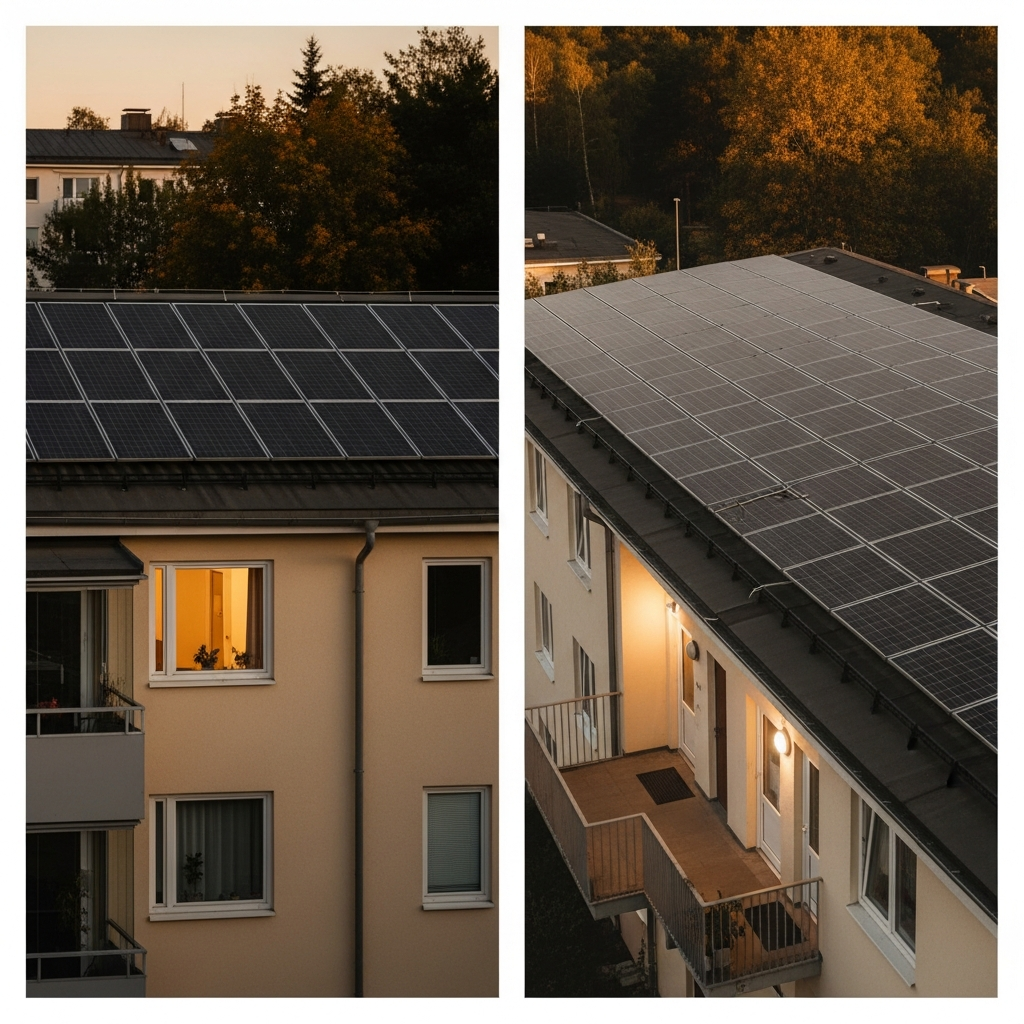
You have more options than you might think. It’s not just about putting a few panels up for your own use.
| System Type | How It Works | Best For | Key Consideration |
|---|---|---|---|
| Individual System | You install a small system on a designated part of the roof that powers only your apartment. | Smaller buildings or owners who want direct control and benefit of their own system. | Requires an exclusive use by-law and careful roof space allocation. |
| Common Property System | A larger solar system is installed to power shared building services like lights, lifts, and pool pumps. | Buildings with high common area energy usage. The savings are used to reduce strata levies for all owners. | The cost is shared by all owners via a special levy, but the benefit is also shared. |
| Shared Distribution System | A single large solar array is installed, and the power is distributed among multiple apartments. | Medium to large buildings where many residents want solar but individual systems are impractical. | Requires specialised technology like Allume Energy’s SolShare to manage the distribution and billing. |
From my analysis, the models that benefit the whole building often have the easiest path to approval.
Case Study: A Strata Block in Camperdown The owners corporation for a 25-unit building in Camperdown was facing annual common power bills of over $12,000 for their two lifts and lighting. An owner proposed a 20kW shared solar system to offset these costs. The total installed cost was $28,000. After the federal STC rebate, the outlay was around $20,000, funded by a one-off special levy of $800 per apartment. The system now saves the strata scheme over $4,500 annually in common electricity costs, meaning the project will pay for itself in under 5 years and deliver ongoing reductions to everyone’s levies for decades.
Common challenges of installing solar panels in strata buildings
It’s wise to be aware of the potential roadblocks so you can plan for them.
-
Roof Space: Who gets which bit of the roof? North-facing, unshaded areas are prime real estate. A clear, fair plan for allocation is essential.
-
Structural Integrity: An engineer must certify that the roof can handle the additional weight of the panels and mounting system.
-
Waterproofing: Any roof penetrations must be done by an expert to avoid compromising the building’s waterproof membrane. The installer’s warranty and insurance must cover this.
-
Resident Opposition: Some owners may be resistant to change, concerned about the cost, or worried about the aesthetics. A clear, fact-based presentation is your best tool to counter this.
Your next steps
Getting solar for your apartment in Sydney is a journey, but it is more feasible now than ever before thanks to supportive laws and new technology. The key is to be prepared, communicate clearly, and present a professional case to your owners corporation.
Start by researching experienced strata solar installers and talking to your neighbours. If you’re feeling overwhelmed and want to speak with a trusted local expert who understands the ins and outs of strata approval, I can help. Just fill out the form below and I can connect you with an SAA-accredited professional in your area.