Fast Read
Yes, a solar battery is an excellent way of blackout proofing a Brisbane home. A typical 10kWh home battery for solar, like a Sungrow SBR or Tesla Powerwall, will cost between $9,000 and $14,000 fully installed in 2025. This investment provides backup power to run essential appliances during an outage and can significantly reduce your electricity bills. Thanks to the federal government’s Cheaper Home Batteries Program, which launched in July 2025, Brisbane homeowners can receive a rebate of up to 30%, potentially saving around $4,000 on a standard 11-13kWh battery system, making the move to energy independence more affordable than ever.
Why blackout proofing is a smart move for Brisbane homes
Living in Brisbane means enjoying plenty of sunshine, but it also means dealing with a climate that can be unpredictable. Severe weather, especially during the summer storm season, is a primary cause of power outages across the city. High winds, lightning, and flooding can all damage infrastructure and lead to blackouts. Beyond storms, summer heatwaves can strain the electricity grid as air conditioner usage soars, occasionally leading to load-shedding or equipment failure.
For a household, even a short outage can be disruptive, spoiling food, cutting off internet access, and leaving you in the dark. For those who rely on medical equipment, it can be critical. A solar battery provides a seamless solution, acting as your personal power reserve. When the grid goes down, a battery with backup capability can automatically switch over in milliseconds, keeping your essential appliances running without interruption. It’s about more than just convenience; it’s about energy security and peace of mind.
The cost of solar batteries in Brisbane (2025)
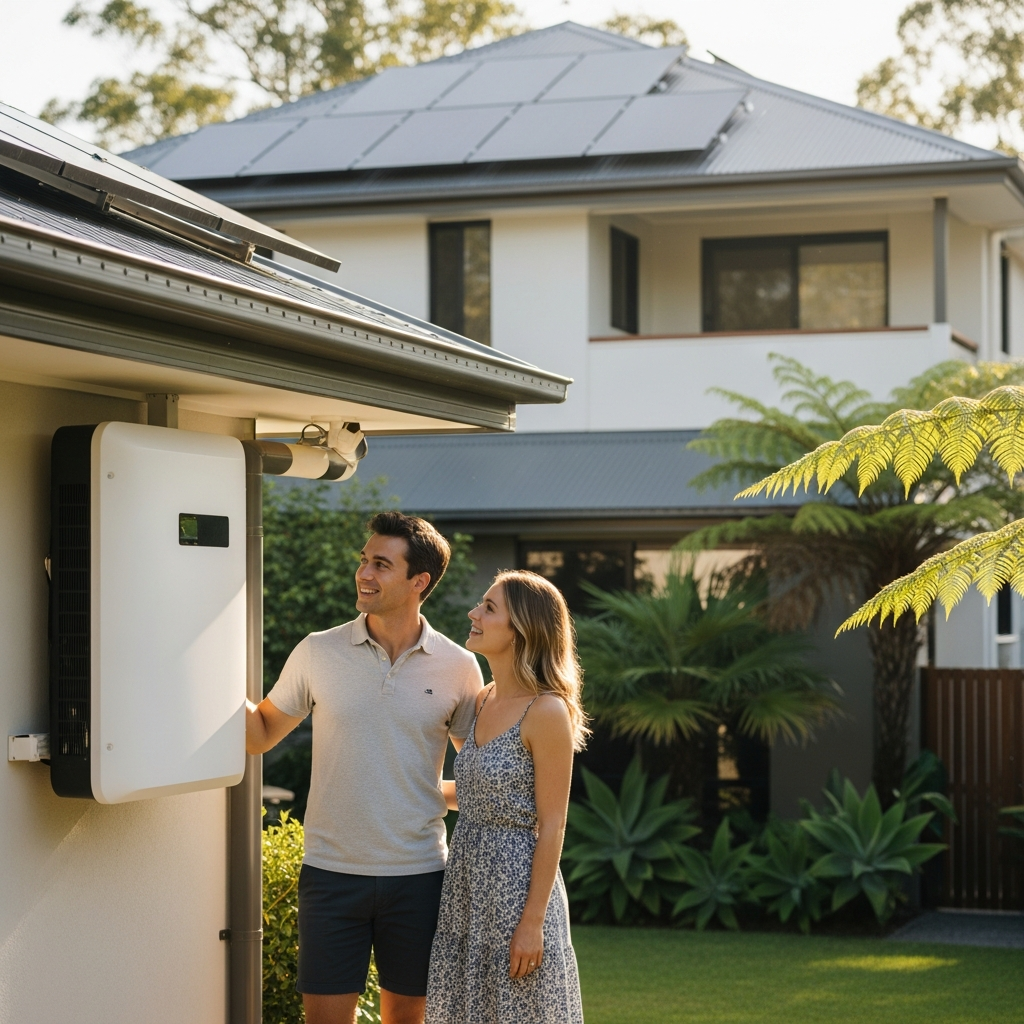
The upfront price of solar batteries for homes has become much more accessible in recent years. In 2025, the cost is largely determined by the battery’s capacity (measured in kilowatt-hours, or kWh) and the brand.
Here’s a general guide to what you can expect to pay for a fully installed home battery in Brisbane:
-
Small (5–7 kWh): $5,500 – $8,000
-
Medium (10–13.5 kWh): $9,000 – $14,000
-
Large (15–20+ kWh): $15,000 – $20,000+
These prices typically include the battery unit, a compatible hybrid inverter (if needed), and standard installation. It’s important to remember that factors like installation complexity or the need for a switchboard upgrade can influence the final price. For those installing a battery with a new 6.6kW solar system, the combined package price generally ranges from $12,000 to $25,000.
Case Study: A Family in The Gap The Kumar family was facing quarterly power bills of over $600. They installed a 6.6kW system with Trina panels and a 10kWh Sungrow battery for a total cost of $15,500. After the federal battery rebate, their outlay was closer to $11,500. Their annual savings are now over $2,200, putting them on track for a payback period of just over 5 years, and their last bill was only the daily grid connection fee.
Best solar battery brands in Australia for 2025
The Australian market is fortunate to have a wide range of high-quality, reliable solar battery brands. From my analysis, these are the standout options for homeowners this year:
| Brand | Key Strengths | Best For |
|---|---|---|
| Sungrow | Excellent performance, modular design (9.6kWh to 25.6kWh), and outstanding value. | Overall performance and affordability. |
| Tesla | High capacity (Powerwall 3), sleek design, and seamless integration with the Tesla app and EV chargers. | Smart home integration and premium features. |
| Sigenergy | All-in-one system integrating solar, battery, and EV charging with smart AI management. | Tech-savvy users wanting a future-proof, integrated system. |
| BYD | Highly modular and scalable design, compatible with many inverters, and uses safe LFP chemistry. | Customisation and high-capacity needs. |
| AlphaESS | Very competitive pricing, flexible modular systems (2.9kWh to over 80kWh), and strong Australian support. | Budget-conscious buyers seeking a scalable solution. |
Gigi’s Pro Tip: When comparing battery warranties, look for both the number of years (typically 10) and the warranted ‘cycle life’ or ‘throughput’. A 10-year warranty is standard, but a higher cycle life rating (most quality brands offer 6,000-10,000 cycles) indicates greater durability and long-term value.
Queensland government solar battery rebates and incentives 2025
This is where investing in blackout proofing gets really exciting. The biggest news for 2025 is the federal government’s Cheaper Home Batteries Program, which launched on July 1st.
Here’s what you need to know:
-
What it is: A national program designed to make home batteries more affordable.
-
How much you can get: It offers a rebate of up to 30%, which could be around $4,000 for a typical 11-13kWh battery. The rebate is calculated per kWh of usable capacity.
-
Eligibility: The program is open to homeowners with new or existing solar panel systems. There are no income restrictions, but you must use an accredited installer and approved products.
While the popular Queensland Government Battery Booster Program is currently closed to new applicants, it’s always worth checking for new state-based initiatives. The most reliable and significant financial support right now comes from the new federal scheme, which can be combined with the upfront discount from Small-scale Technology Certificates (STCs) when installing a complete new solar and battery system.
How to size a solar battery for your Brisbane home

Choosing the right size battery is crucial—too small and you won’t have enough power for an outage; too large and you’ve overinvested. Here’s a simple process to follow:
-
1. Check your electricity bill: Find your average daily energy consumption in kWh. Your bill is the best source of this data.
-
2. Estimate your overnight usage: Most households use the majority of their power in the evening and overnight when solar panels aren’t producing. As a general rule, this is often 60-70% of your total daily usage. For a home that uses 20kWh per day, that’s about 12-14kWh needed after the sun goes down.
-
3. Consider your blackout needs: Do you want to run just the essentials (fridge, lights, Wi-Fi) or larger appliances like an air conditioner? If reliable backup is your main goal for blackout proofing your Brisbane home, you may want to size up slightly to ensure you have enough power to last through an extended outage.
-
4. Match it to your solar system: To charge a 10kWh battery effectively each day, you generally need at least a 6.6kW solar panel system. A common rule of thumb is to have around 1.5kWh of battery storage for every 1kW of solar panels.
A professional installer, accredited by Solar Accreditation Australia (SAA), can perform a detailed analysis of your usage patterns to recommend the perfect size.
Finding a trusted Brisbane solar battery installer
Choosing the right installer is just as important as choosing the right battery. A quality installation ensures safety, compliance, and optimal performance. When researching companies, I recommend you:
-
Check for SAA Accreditation: Insist on an installer accredited by Solar Accreditation Australia (SAA). This is the current, highest industry standard for solar professionals.
-
Read independent reviews: Look at reviews on platforms like Google, Trustpilot, and solar-specific forums to gauge customer satisfaction.
-
Ask for local experience: Choose a company with a proven track record of installing solar batteries in the Brisbane area. They will be familiar with local council requirements and Energex network standards.
-
Get multiple quotes: I always advise getting at least three detailed quotes to compare costs, recommended products, and warranties. Be wary of any quote that is significantly cheaper than the others, as it may indicate subpar products or installation practices.
If you’re feeling overwhelmed by the research, I can help. I can connect you with a trusted local expert who has already been vetted for quality and service.
What can you actually run during a blackout?
What your home solar battery can power during an outage depends on its capacity (kWh) and its peak power output (kW).
-
Capacity (kWh): This is how much energy is stored. A 10kWh battery could run a 1kW appliance for 10 hours. A typical 10kWh battery can comfortably power essential loads overnight.
-
Power Output (kW): This is how many appliances you can run at the same time. Most batteries have a continuous power output of around 5kW.
With a standard 10kWh battery (like a Tesla Powerwall or Sungrow SBR), you can typically run:
-
Refrigerator and freezer
-
Lights in several rooms
-
Wi-Fi modem and computers
-
A television
-
Phone and device chargers
-
Fans or a small, efficient air conditioner
Large, power-hungry appliances like ovens, clothes dryers, or ducted air conditioning systems will drain a battery very quickly and may exceed its power output rating. The great news is that during an extended outage, your solar panels will recharge the battery each day, keeping you powered for as long as needed.
Solar battery lifespan and maintenance
Modern lithium-ion solar batteries, particularly the Lithium Iron Phosphate (LFP) type used by brands like Sungrow and BYD, are designed to be low-maintenance and long-lasting.
You can generally expect a quality solar battery to last between 10 to 15 years. The lifespan is determined by factors like its chemistry, cycle life, and operating temperature. Most manufacturers provide a 10-year warranty that guarantees the battery will retain a certain percentage of its original capacity (usually 70-80%) by the end of the warranty period.
To maximise your battery’s life, it’s best to have it installed in a location that avoids extreme heat and has good ventilation, like a garage or a shaded spot on an external wall. Your installer will ensure it’s placed in a compliant and optimal location. Beyond that, the system’s own battery management software handles the charging and discharging, so there’s very little you need to do.
Feeling ready to take the next step towards an energy-secure home? If you’d like a free, no-obligation estimate tailored to your needs, I can help you get started.