Fast Read
From signing the contract to having your system fully operational, a solar and battery installation in Brisbane typically takes between 4 to 12 weeks. The physical installation of panels and a battery like a Tesla Powerwall 3 or Sungrow SBR is surprisingly quick, often just 1 to 3 days. However, the total solar and battery installation brisbane time is mostly determined by administrative stages like system design, Energex grid connection approval, and the final meter exchange, which can take several weeks.
How long does a solar and battery installation take in Brisbane?
When I talk to Brisbane homeowners about switching to solar, their biggest question is often about the timeline. It’s easy to focus on the day the installers are on your roof, but the journey from your initial decision to flicking the ‘on’ switch involves several key stages. The physical installation is just one piece of a larger puzzle.
From my analysis of dozens of system quotes and project plans, the entire process can be broken down into distinct phases. While every project is unique, understanding this flow helps manage expectations and ensures there are no surprises.
Here’s a realistic breakdown of the solar panel and battery installation process timeline in Queensland:
| Stage | Typical Duration | Key Activities |
|---|---|---|
| 1. Consultation & System Design | 1–2 weeks | Site assessment, energy needs analysis, system design, finalising quote. |
| 2. Grid Connection Approval | 1–5 weeks | Your installer lodges a connection application with Energex. |
| 3. Installation Day(s) | 1–3 days | Mounting panels, installing the inverter and home battery. |
| 4. Post-Installation Paperwork | 1–2 days | Installer submits compliance forms to Energex. |
| 5. Meter Exchange & Grid Connection | 1–4 weeks | Your retailer requests a new meter from Energex; system is activated. |
Let’s break down what happens in each of these stages.
How long does it take to install rooftop solar panels in Brisbane?
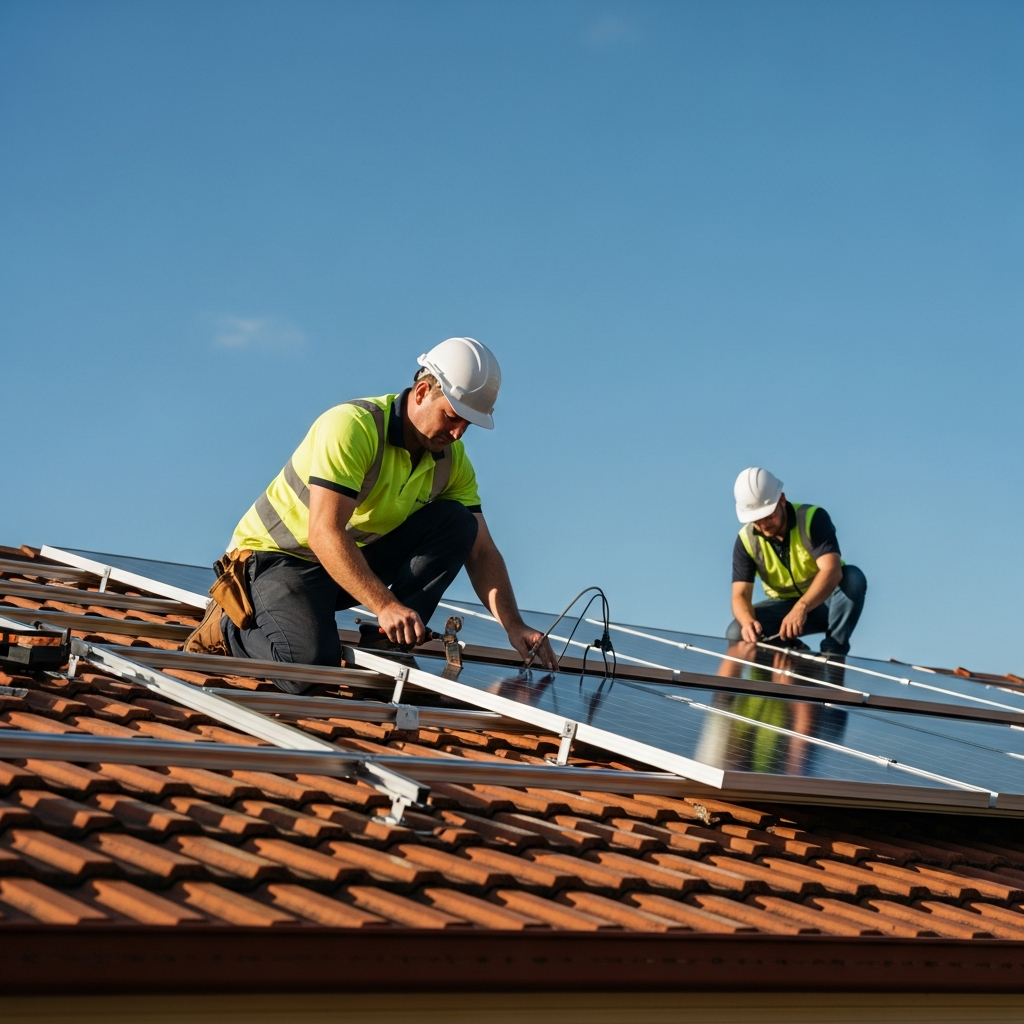
The on-site, physical installation of solar panels is the part everyone sees and is often the fastest stage of the whole process. For a standard residential solar power installation in Brisbane, you can expect the work to take between one and three days.
A number of factors influence this timeframe:
- System Size: A straightforward 6.6kW system on an accessible tin roof might only take a single day. A larger, more complex 10kW+ system could extend into a second day.
- Roof Type: Installing on a tile roof generally takes longer than a metal roof due to the extra care required to prevent breakages and ensure waterproofing.
- Property Complexity: Difficult roof access, steep pitches, or the need for significant electrical work can add time to the job.
- Weather: Poor weather, especially rain or high winds, can cause delays for safety reasons.
An experienced, SAA-accredited installation team will work efficiently, but they will not rush. Safety and compliance with Australian Standards like AS/NZS 5033 are paramount.
How long does it take to install a home solar battery?
Adding a home battery to your solar power installation is becoming incredibly popular in Brisbane, especially with households wanting to maximise their energy independence. A solar battery installation can often be completed on the same day as the solar panels if they are installed together.
If you are retrofitting a battery to an existing solar system, the installation typically takes between half a day and a full day. Products like the Tesla Powerwall 3 or Sungrow SBR are designed for efficient installation by qualified electricians.
The key steps for the battery installation itself include: Case Study: A Family in The Gap The Kumar family was facing quarterly power bills of over $600. They installed a 6.6kW system with Trina panels and a 10kWh Sungrow battery for a total cost of $15,500. After the federal battery rebate, their outlay was closer to $11,500. Their annual savings are now over $2,200, putting them on track for a payback period of just over 5 years , and their last bill was only the daily grid connection fee.
- Site Preparation: Confirming the location (often a garage or an external wall) and ensuring the surface is suitable.
- Mounting: Securely fixing the battery unit to the wall or floor.
- Electrical Connection: Wiring the battery to your inverter and switchboard.
- System Commissioning: Configuring the battery and its software, and connecting it to your home’s Wi-Fi for monitoring.
What are the Energex solar connection approval timeframes?

This is the most variable part of the timeline and where homeowners often feel a bit of a delay. Before any installation can begin, your chosen installer must submit a network connection application to Energex on your behalf.
Here’s what you need to know about Energex’s approval process: Gigi’s Pro Tip: You cannot legally turn your system on until the new smart meter is installed. This meter is what allows you to measure the electricity you send back to the grid and receive credit for it. Be patient during this final waiting period—it’s the last hurdle before you start saving.
- Initial Application Approval: This is permission to install the system as designed. For small residential systems (under 5kW), this approval can be almost instant through Energex’s online portal. For larger or more complex systems, a technical review is needed, which can take up to five weeks.
- Post-Installation Connection: After the installation is complete, your installer submits paperwork certifying the work meets all standards. Your electricity retailer then requests Energex to reconfigure or replace your meter. This final step, often called the “meter exchange,” can take anywhere from 10 business days to several weeks, depending on workloads.
What other factors can affect the solar installation duration?
While the process is generally smooth, I’ve seen a few common things that can stretch out the solar and battery installation brisbane time. Being aware of them can help you prepare.
- Permitting and Paperwork: A good installer manages all of this, but if applications are filled out incorrectly or require extra information, it can cause delays.
- Equipment Availability: While most common panels and batteries (like REC or Jinko panels) are readily available, specific or newly released models might have waiting periods. I spoke with an SAA-accredited installer last week who highlighted that supply chain disruptions, though less common now, can still occasionally impact timelines for particular components.
- Switchboard Upgrades: Older homes may need their switchboard upgraded to safely handle the new solar and battery system. This is a common requirement and will be identified during the initial site assessment.
- Installer Availability: Reputable installers are often booked out weeks or even months in advance. It’s a good sign of quality, but it means you should start the process well before you want the system running.
Your final step to energy freedom
The journey to installing solar panels and a battery in Brisbane is a multi-step process, but one that is well worth the wait. While the physical installation is quick, the crucial background work of design, approvals, and grid connection is what ensures your system is safe, compliant, and ready to save you money for decades.
Understanding the timeline from the outset helps you plan accordingly and choose an installer who communicates clearly at every stage. If you’re ready to take the next step and get a clear idea of your personal installation timeline, I can help.
I can connect you with a trusted local expert who can provide a detailed quote and timeframe for your home. Just fill out the form below to get started.